

The Victorian Labor announced today that it will act on advice from two key consultation processes that were launched to determine the future of Victoria’s native forests on public land, after the cessation of the native forest logging industry in 2024. The Great Outdoors Taskforce (GOT) and the Eminent Panel for Community Engagement (EPCE) have produced long-awaited reports detailing their recommendations.
Friends of the Earth celebrates multiple positive initiatives detailed within this announcement. However, we eagerly await more detail about Labor's promised new Public Land Act and expect further legislative amendments to ensure the government will permanently prevent logging and commercial extraction in Victoria’s native forests.
The Labor government described its response to the Great Outdoors Taskforce process as 'a major program of forest management reform.’ In a press release, Our Plan for Victoria’s Outdoors, environment Minister Steve Dimopoulos said that "by ending large-scale native timber harvesting, we’ve given our forests a future. Now we’re making sure every Victorian can share in it."
It’s really positive news that a Cultural Reserve pilot in the Strathbogie Ranges on Taungurung Country will go ahead. This pilot, along with the formal recognition of Cultural Landscapes, will be the beginning of implementing Firsts Peoples’ pathways for forest Country. You can read Taungurung Land & Water's Council's media release here.
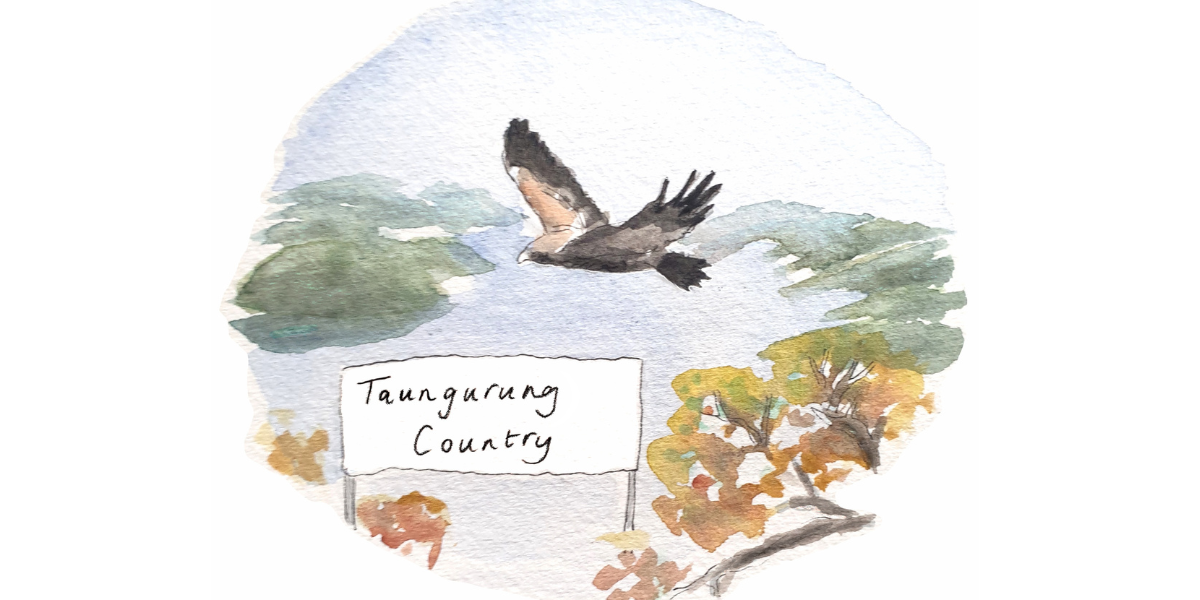
Illustration by Sofia Sabbagh.
The government also announced allocated funding for activities that will 'guide visitors, tackle pests and weeds, and protect native wildlife,' which is very welcome. It's great to see investment in on-the-ground field work and infrastructure like camp sites and facilities. It's also exciting to see new visitor education programs to inform locals and visitors about the environment and promote respectful behaviour.
New collaborative forest management pilots to create 'Healthy Forests Plans' was a core recommendation of the Great Outdoors Taskforce (pg. 23). In their response today, the Vic gov committed to piloting these plans in Noojee and Orbost, stating that the plans “will enable communities to guide where and when land managers prioritise management activities, including forest restoration, recreation, economic development and cultural heritage. Importantly, the Great Outdoors Taskforce report recommended that "Healthy Forest Plans must not include management of state forests for native timber harvesting."
Friends of the Earth is hopeful that these pilot programs will be positive & will evolve to catalyse holistic forest restoration at scale, repair logged landscapes and enable local communities across the state to come together to move forward, beyond logging.
Friends of the Earth supports collaborative approaches to caring for native forests that prioritise First Peoples decision making and priority setting and invites the participation of local communities, volunteers, and environment groups. We commend the government’s intention to pilot holistic, place-based programs that embrace local communities in the process of forest regeneration.
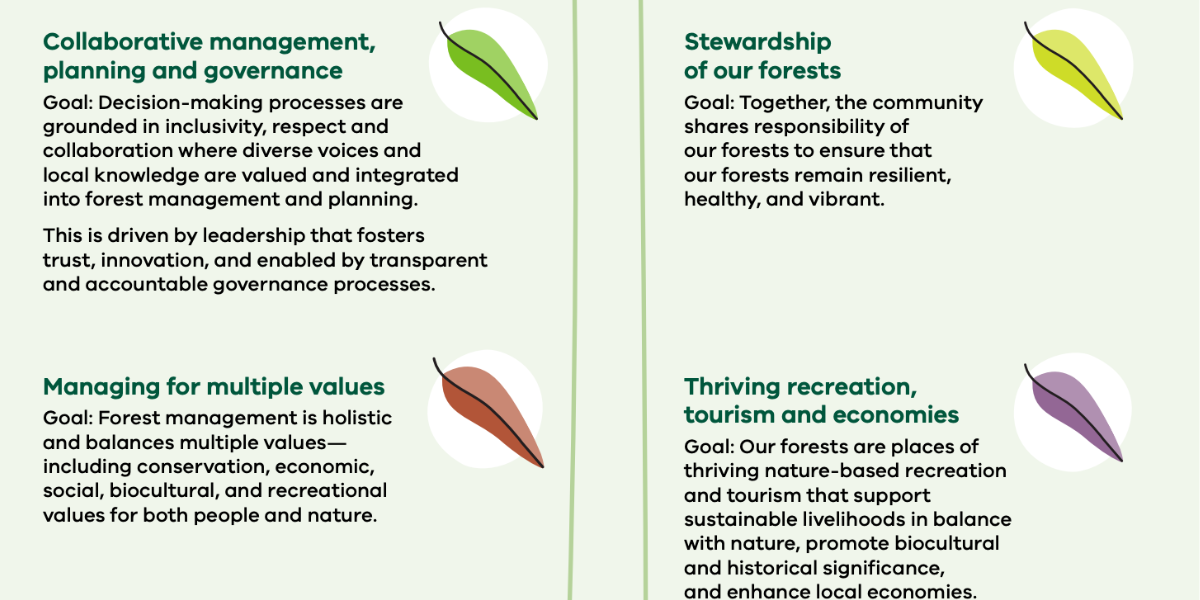
Excerpt from the Great Outdoors Taskforce report.
Minister Dimopoulos also recently delivered promised protected areas in the west of the state and created a conservation reserve in Mirboo North, which protects significant greater glider habitat, after a long community campaigns (read more about this previous announcement concerning the introduction of the Parks and Public Land Bill 2025 here). FoE is grateful for some positive momentum after years of engagement!
However, we eagerly await evidence of significant legislative reform that can ensure native forests are permanently protected. Clear-felling may have ended in 2024, but the job will not be done until all logging loopholes have been closed and legislative change permanently protects native forests from exploitation.
The Great Outdoors Taskforce recommended "changing relevant legislation and regulations to prevent the return of large-scale commercial native timber harvesting in state forests" and that the Victorian Government should make "appropriate and supplementary changes to other Victorian legislation and regulations managing forests and public land to prevent the return of commercial native timber harvesting in state forests" (pg. 30).
Today’s announcement included measures to protect areas surrounding water catchments in the Yarra Ranges by including them in the existing Yarra Ranges national park. These changes, while necessary, are not nearly significant enough to protect critically endangered mountain ecosystems or ensure ecological resilience and connectivity. FoE hopes Minister Dimopoulos will pass amendments that permanently prevent all future industrial threats, including mining and salvage logging, in native forests.
These public land consultations have been some of the most significant in Victoria’s history. They must result in legislative changes that provide permanent, comprehensive protection from industrial and commercial extraction for Victoria’s native forest ecosystems.
The government states it has taken the following actions to "provide longevity to its policy to cease large-scale native timber harvesting in State forests":
- Abolishing VicForests, which was responsible for all timber harvesting on public land.
- Repealing the Sustainable Forests (Timber) Act 2004, which provided the legislative framework for timber access and harvesting in State forests.
- Terminating Regional Forest Agreements, which enabled streamlined regulatory processes for native timber harvesting. New RFAs cannot be created due to legislative limitations.
Labor has indicated that its announcement includes finalising a new Public Land Act and will involve “legislating management purposes for the 3.2 million hectares of state forests to ensure they are managed for multiple outcomes.” The ‘state forest’ land category was historically designed to enable commercial extraction, so it’s no longer fit for purpose now that the native forest logging industry has ended. FoE hopes Labor’s ‘modernisation' of the Public Land Act will include amendments that permanently protect native forest ecosystems from exploitation and future industrial threats, including mining and salvage logging. Minister Dimopoulos' legacy can be finishing what Labor began when it ended logging, by permanently preventing all industrial and commercial extraction in native forests.
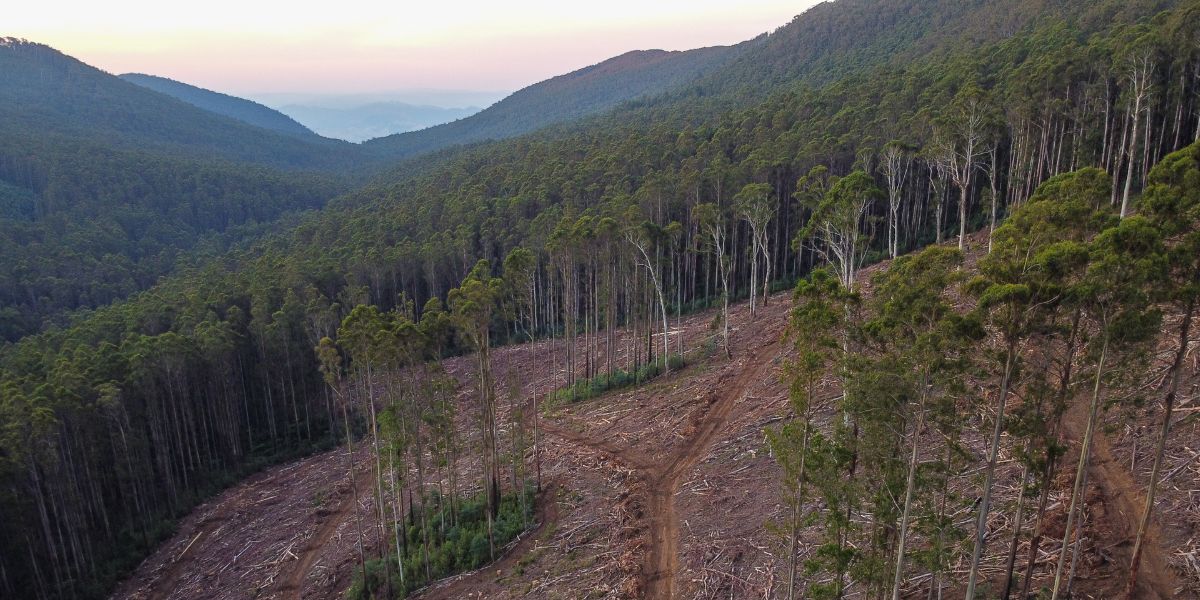 Logged forest near Snobs Ck on Taungurung Country. Photo credit: Manic Seeds Media.
In today’s announcement, the government stated that “since 2024, they have regenerated over 1,200 hectares of forest.” However, the GOT report outlined that there was at least 1,200 hectares of forest requiring regeneration just in their relevant study area (the North East region and Gippsland). ANU research released in May also mapped over 8,000 hectares of forest that had failed to regenerate in the Central Highlands region alone.
Forest restoration initiatives outlined in the announcement will need to be properly resourced in consecutive state budgets in order to address the scope of ecosystem repair that's required after decades of mismanagement. FoE hopes some of the recommendations that have emerged during these consultations about the need for secure funding for land management will be further explored.
FoE welcomes these comprehensive engagement reports and thanks Minister Dimopoulos for these recent commitments. While we remain cautious (after years of vested interests running the show), we commend the government's decision to fund transformative pilot projects that we hope may fundamentally shift the relationship between Victorian communities and native forests. The government stated in their announcement that:
“Tree planting and regeneration are most powerful when communities are part of it. We’ll be working alongside our passionate community volunteers, Traditional Owners and environmental groups to regenerate local forests. By working side by side with volunteers, we’re helping people connect deeply with the places they love and take ownership of their future. Volunteers aren’t just helping us plant trees – they're shaping the landscape for generations to come. Volunteer-driven regeneration lets us achieve more, faster – restoring more land, supporting biodiversity, and creating stronger community ties.”
Friends of the Earth is hopeful that the government programs referenced in the announcement, including rebuilding seed stores to regenerate forests after major disturbances like logging and bushfire, will continue to increase their capacity to ensure the survival of critically endangered mountain ash forests and vulnerable alpine ash forests.
These programs, in addition to emerging initiatives to assess the decline of Snow Gum woodlands due to climate threats like frequent bushfire and dieback, will be necessary to help forests recover from the impact of logging and prevent ecosystem collapse in Victoria.
Positives outcomes of today’s commitment from the Vic government:
- Reforms to the Public Land Act will enable Traditional Owner collaborative governance, planning and management of forests, including enabling the creation of Cultural Reserves and the formal recognition of Cultural Landscapes.
- Taungurung Land & Waters Council’s Cultural Reserve pilot in the Strathbogies Ranges will be implemented.
- $4 million to deliver more on-ground field staff to help guide and educate forest visitors, encourage positive behaviours, and work with communities to support the needs of local and visiting users.
- $4 million to pilot collaborative forest management models via Healthy Forest Plans.
- $19 million dollar investment for Parks Victoria infrastructure like campsites, facilities and educational signage to inform the public about environmental and cultural values.
SUMMARY OF RECOMMENDATIONS OF THE GREAT OUTDOORS TASKFORCE REPORT
Excerpt from the Great Outdoors Taskforce report.
- Develop Healthy Forest Plans across all state forests in the North East and Gippsland regions (Taskforce study area). Healthy Forest Plans should be place-based forest management plans that are developed and implemented in collaboration with local communities, Traditional Owners, and user groups to manage forests for multiple values.
- The Department of Energy, Environment and Climate Action (DEECA) should continue to have ultimate responsibility for the management and planning of state forests.
- Develop collaborative management guidelines for public participation and decision-making on forest management that is place-based and in partnership with local communities, Traditional Owners, and user groups.
- State forests should be managed for multiple outcomes and values, including conservation, economic, social, biocultural, and recreational values.
- Change relevant legislation and regulations to prevent the return of large-scale commercial native timber harvesting in state forests. This should not limit Traditional Owner or the government’s forest and fire management activities.
- Invest in the collection of meaningful data and develop a holistic data system to accurately monitor and evaluate forests across all values. The data system should include indicators from conservation science, forests science, citizen science and Traditional Owner land management measures.
- Update Victoria’s public land management framework to enable Traditional Owner collaborative management, planning and governance across public forests. Collaborative management models should be developed and pilots resourced to demonstrate concepts and projects on Country at a local scale.
- Develop a Great Outdoors marketing campaign to encourage people to visit and value Victoria’s forests, and work with forest users to educate and promote positive behaviours when using forests.
- Increase numbers of on-ground field staff to work with communities, collaborate locally, educate to address negative behaviours, enable better maintenance of amenities and infrastructure and provide more visible staff presence.
- Develop place-based forest tourism plans for priority destination nodes to drive investment in nature-based tourism and recreation in and adjacent to state forests. These plans should determine priorities and develop a holistic visitor experience based on the unique local attractions and amenities of each area.
- Establish a dedicated fund for works that restore, maintain or improve existing visitor amenities and infrastructure in forests such as campgrounds, toilet blocks, picnic areas, and tracks and trails. Priorities for investment should be determined in consultation with the local communities, Traditional Owners, and user groups.
- Establish an investment coordination panel to develop a nature-based Tourism Product Development and Licensing Strategy and investigate a ‘commercial user pays’ funding model that applies to commercial tourism uses of state forests.
- Conduct further assessment of the feasibility, need and benefit of the listed nature-based and recreation projects in Appendix 2 of this report.
- DEECA undertake restoration of state forests that have been previously subject to recent timber harvesting, in consultation with local communities, Traditional Owners and user groups.
- Implement ongoing programs that manage invasive pests and weeds across land tenures as part of Healthy Forest Plans.
Other positive measures the Great Outdoors Taskforce recommend in their report:
- Pilot programs with Gunaikurnai, Taungurung and Yorta Yorta Traditional Owners.
- Commercial tourism operators should contribute to protecting and maintaining the health of our forests.
- Invest in the collection of meaningful data and develop a holistic data system to accurately monitor and evaluate forests across all values. The data system should include indicators from conservation science, forests science, citizen science and Traditional Owner land management measures.
- Government should make its decision to end commercial native timber harvesting in state forests clear through legislation and regulations. The Taskforce recommends that the Victorian Government make appropriate and supplementary changes to other Victorian legislation and regulations managing forests and public land to prevent the return of commercial native timber harvesting in state forests. Importantly, these legislative changes should not limit the ability of Traditional Owners to undertake forest and fire management activities on Country.
- DEECA should undertake restoration of state forests that have been previously subject to recent timber harvesting, in consultation with local communities, Traditional Owners and user groups.
FoE’s view at first glance: overall, Friends of the Earth enthusiastically welcomes the GOT’s recommendations and thanks the Taskforce for their comprehensive approach and pursuit of transformative change in their recommendations. However, we contest that “the changes should not limit the government’s ability to continue activities that fulfil its ongoing forest and fire management obligation.” FoE opposes planned burns and calls for a comprehensive, scientific review of the state’s broad acre burning and strategic fuel break programs (read more on the impacts of planned burning on Kinglake Friends of the Forest's and the Victorian Forest Alliance's websites). We do strongly support First Peoples cultural burning programs and agree that the changes should not be prescriptive in ways that would prevent First Peoples access to bio-cultural resources. For forest protection allies expressing concern, FoE can find no evidence that the name 'Healthy Forests Plans' has any connection to ex-VicForests CEO Monique Dawson's 'Healthy Forests Foundation'. We have heard from 1 trusted source that this is not that case. FoE are excited about collaborative models for forest restoration & commend the intention to pilot holistic, place-based programs that embrace local communities in the process of forest regeneration.
SUMMARY OF RECOMMENDATIONS OF THE EMINENT PANEL FOR COMMUNITY ENGAGEMENT REPORT:
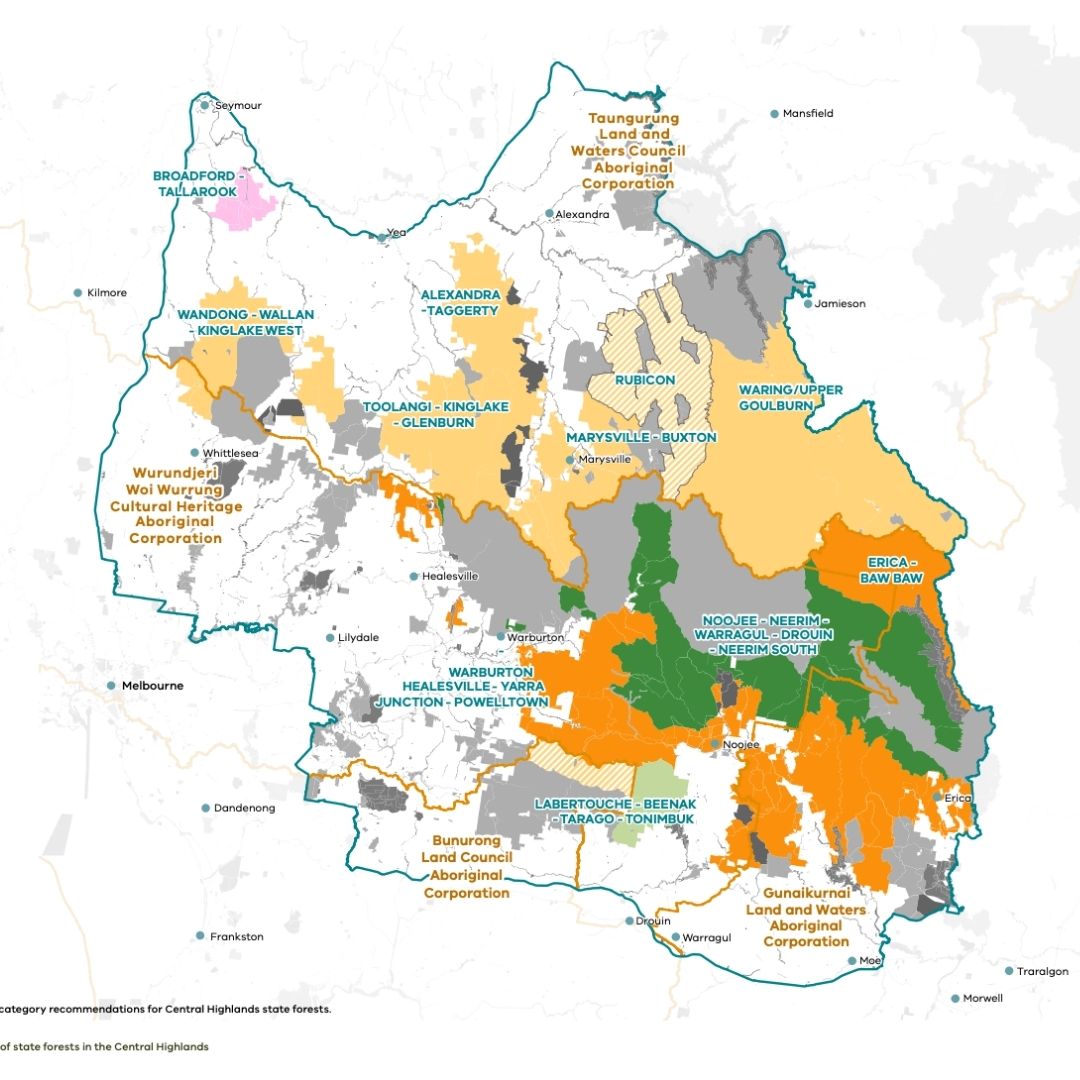
- Recommend that new collaborative approaches be developed for the governance, planning and management of the Central Highlands landscape that bring together community, Traditional Owners, land managers, scientists and researchers to care for forests. This should include pilots for demonstrating the approach.
- Recommend reforms to Victoria’s public land legislation are progressed as a priority to address: consolidated public land categories • supporting collaborative governance • confusion around permitted uses and management purposes • supporting a landscapes approach.
- Recommend that provisions for future cultural governance, planning and management be put in place across the suite of existing land tenures for the Central Highlands. Additional options such as the new cultural reserve public land category and a cultural landscape overlay in Victoria’s land management framework should be progressed in consultation with Traditional Owners, to remove barriers and maximise opportunities into the future.
- Recommend that the contribution of cultural reserves and areas effectively contributing to conservation over time be assessed and considered for addition to Victoria’s protected area system.
- Recommend reframing environmental management to better build resilience and reflect the unique and significant values of these forests. This includes designing and implementing active and adaptive management – including protection, ecosystem restoration, disturbance management and threat mitigation, and monitoring for state forests. Such approaches should be placedbased and tailored to local ecological conditions, community values, and biocultural expressions and health of Country. Considering landscapes and regional scale issues, the Panel notes the relevance of this recommendation to supporting environmental planning and management across all public land.
- Recommend that education and communication programs be developed that supports better understanding of responsible experience in the Central Highlands forests, including the difference between public land categories, safe levels of use and restoring forest health. This should: • build on the relationship between people and forests for collective benefit • be accessible and support a diversity of users • support understanding of Traditional Owner connection, care and healing of Country • targeted education campaigns around ‘bush ethics’, responsible behaviours and how to enjoy these forests safely.
- Recommend that as soon as practicable, a new overarching forest management strategy, collaboration road map and subsequent management plans be developed for the Central Highlands forests. These management plans should: • identify overarching management purposes • pilot and test new frameworks and practices • adopt a landscapes approach regardless of tenure, as well as a focus on Place and local context • recognise the important and dynamic relationships between forests and people • support ‘braiding’ – the bringing together and making stronger – of Traditional Owner and environmental science (including conservation and forestry) thinking and practice • redefine active and adaptive management and the role of people in landscapes • practice adaptive, responsive and innovative approaches through a flexible, iterative process of learning and decision making • establish direction and planning for landscape restoration programs, including for previously harvested coupes.
- Recommend investment in establishing the enabling conditions for Recommendation 7, including: • upgrading spatial data and information systems to support planning and management (e.g. roads, tracks and trails that supports a range of recreational activities and experiences) • delivery of a comprehensive cross tenure invasive pest plant and animal control programs, particularly deer • reimagine the road track and trail network and forest/park infrastructure to tailor towards new set of management objectives and fit for multiple purposes with sensitive design • resourcing for reading Country, for land and water assessment of biocultural values • resourcing of delivery partners to support collaborative governance, planning and management and development of new land management frameworks • better temporal and spatial planning that shifts activities and experiences in the landscape to provide for a variety of experiences as well as resting and rehabilitation of areas • design and resource active biocultural and biodiversity mapping and monitoring programs, that can deliver biodiversity health monitoring capability to support real time management decision making. Efforts could be supported by researchers, citizen science, communities and philanthropists and would include reseeding for forest restoration, erosion control, habitat restoration (i.e. nestboxes), invasive species control.
- Recommend implementation of a tourism campaign to promote the significance of the Central Highlands forests. This includes: • a single source of information on central highlands forests, values and experiences • recognising and supporting commercial operators such as licenced tour operators, recreational organisations and club membership to promote responsible use, education and training opportunities • promotion of destinations, local tourism and experience opportunities (e.g. existing draw cards, wineries, art galleries) • supporting a range of audiences including culturally and linguistically diverse communities and all-abilities access.
- Recommend resourcing of programs to address unsafe levels of use, including: • supporting local clubs, user groups and peak bodies to provide or support training and forest stewardship education programs to all members • targeted compliance and enforcement programs in priority locations • supporting broader community understanding of safe forest use.
- Recommend a review into the current funding framework for public land in the Central Highlands and identify new, innovative pathways for enhanced funding for public land outcomes.
FoE’s view at first glance: FoE welcomes the recommendations of the EPCE. The report recommended ‘more joined up work across tenures and public land managers at a landscape scale,’ suggested ‘integrated landscape approaches to enhance connectivity between protected areas and surrounding landscapes,’ and advocated for the need to investigate innovative funding options to ensure ‘appropriate resourcing for land and environmental management.’ A report that encourages ‘supporting and harnessing community and recreational users to contribute to land management (e.g. community and volunteers, greater citizen science opportunities, knowledge sharing and collaboration, collaborative management pilots) and to better monitoring, analysing and evaluating practices to improve management for native forests' is to be enthusiastically received.
Read more about place-specific recommendations pg. 61 onward.
FoE thanks the Victorian government for their announcement today. We hope Minister Dimopoulos will next act to:
1. Close all ‘logging loopholes’ to permanently protect all native forests from logging on public and private land, including the ecologically significant forests of the Central Highlands and East Gippsland. Ensure that state forest land category is fit for purpose beyond logging as part of the new Public Land Act reform and make legislative amendments to permanently protect native forests from all industrial and commercial extraction.
2. Deliver the Brataualung reserve handback in Gippsland.
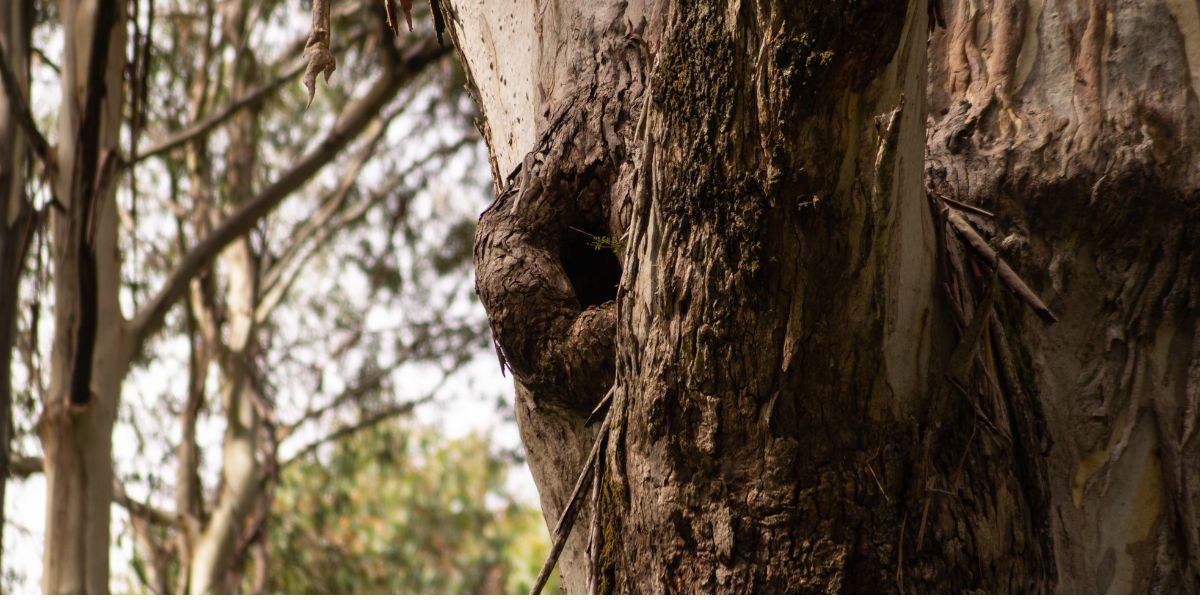 Photo credit: Manic Seeds Media.