
The notorious Country Fire Authority (CFA) Training College at Fiskville started operating in 1971. In 2011, media reports first alleged that the training college caused incidences of cancer in CFA members and their families dating back to the 1970s. 44 years later, the site was permanently closed in 2015 after widespread PFAS contamination at the site and health and safety concerns. Over one thousand trainees were exposed to toxic chemicals at the site with the State Government implementing a $57 million redress scheme in 2022 to support impacted trainees. Fiskville was one of the worst PFAS contamination areas in Australia.
Friends of the Earth has long held suspicions that Geelong's drinking water may have been impacted by the Fiskville disaster. It is quite possible that impacts on drinking water could have been going on for decades. PFAS Testing of drinking water was only initiated by Barwon Water 46 years after Fiskville was first used as a training college. What actually came down the catchment we will never know and why wasn't much closer scrutiny placed on establishing long term PFAS monitoring in downstream waterways, particularly after the Fiskville disaster first came to light in 2011. The only other downstream monitoring was conducted at a few sites by consultants Cardno in 2012, with the results published in 2014.
The Moorabool Water Treatment Plant is located about 25km south of Fiskville and provides drinking water to about 90,000 people in the Geelong region. The Moorabool Water Treatment Plant started operating in 1974. Water from this plant is piped to the Montpellier holding basins in Highton, Geelong. Water at Montpellier is then combined with water from the West Barwon Dam. Any PFAS residues from Moorabool WTP would probably be further diluted with water from the West Barwon.
It is also likely that residents of Meredith (population 800) were also impacted by PFAS chemicals from Fiskville, as the pumping station that supplied that town with drinking water was located about 2km downstream from the location where Eclipse Creek, the main conduit for PFAS chemicals from Fiskville into the Moorabool River, joins the Moorabool River. The Meredith pumping station was closed in 2010, with Meredith residents claiming at that time that the water was making them sick. Meredith residents would have been unaware of PFAS contamination as the Fiskville disaster was not made public for another year. A location on Eclipse Creek, ~4km upstream of the Meredith offtake recorded PFOS at 0.58μg/L (parts per billion) in 2012. (That is 72 times higher than the 2025 Australian drinking water guideline for PFOS).
Friends of the Earth is considering undertaking PFAS testing at some sites in Victoria in the near future. If you feel inspired to make a donation you can do so here.
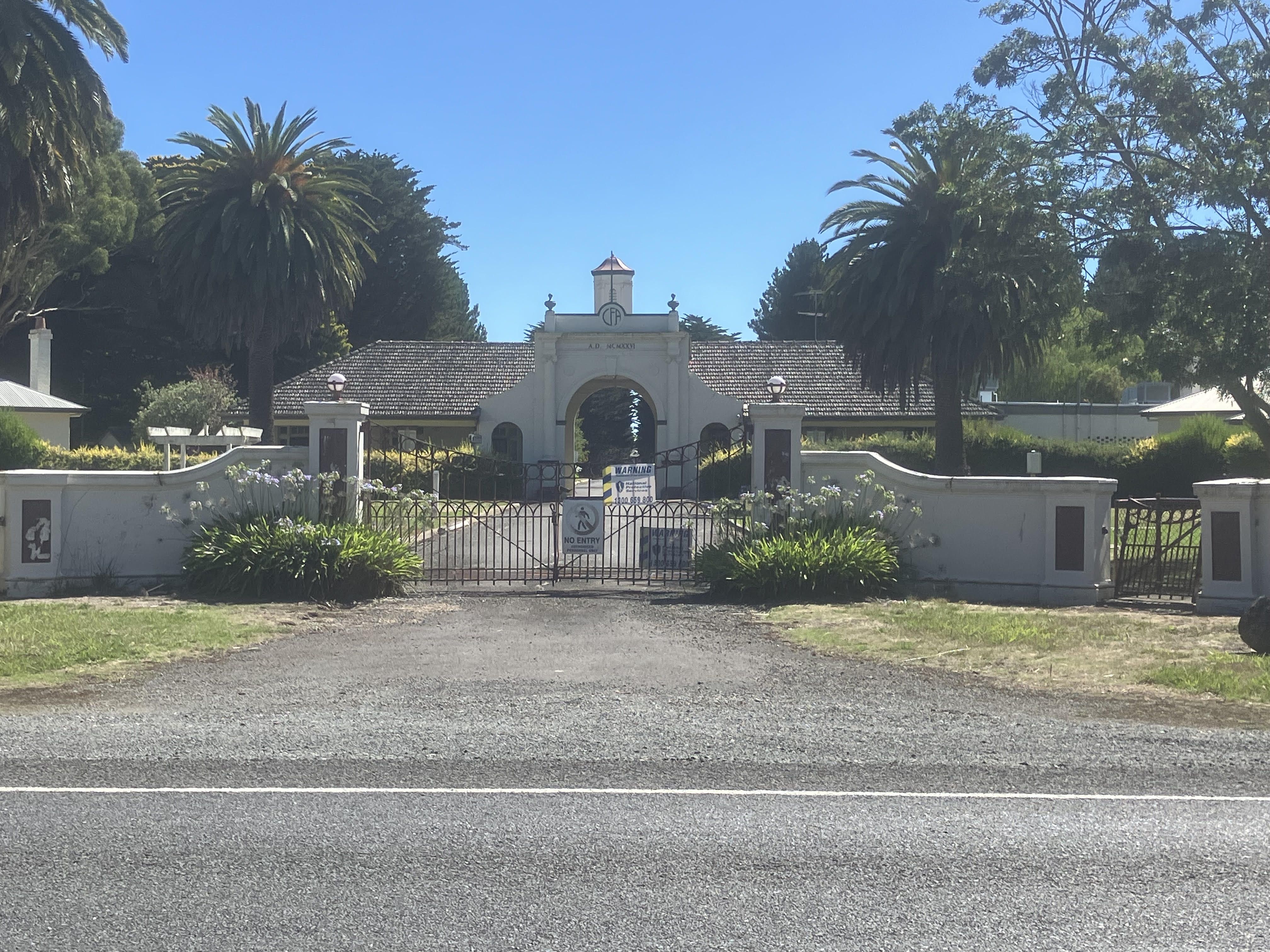
Entrance to the CFA Training College at Fiskville. The facility was closed in 2015. PFAS contaminated AFFF fire fighting foam was supposedly stopped at the site in 2007. The historical use of AFFF has meant that PFAS chemicals accumulated in surface water bodies and soil both on the site and downstream of the site. Remediation of Lake Fiskville, the major source of PFAS contamination in the Moorabool catchment was completed by 2021 but no remediation has been done downstream of the site.
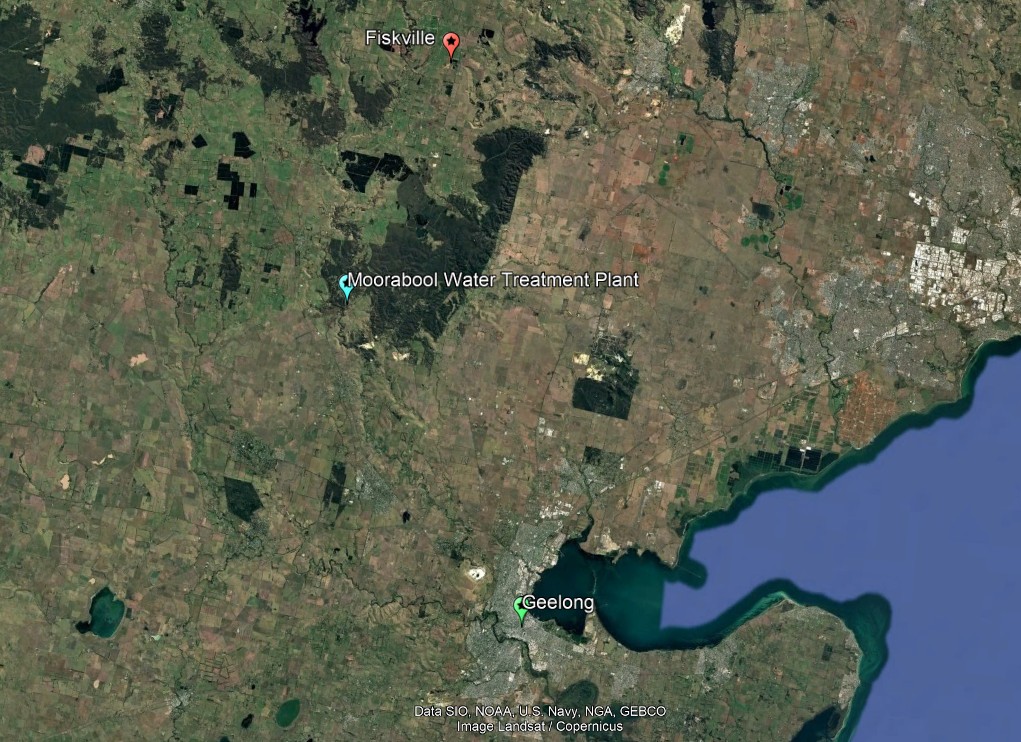
Moorabool Water Treatment Plant is located ~35km north west of Geelong and 25km south west of Fiskville.
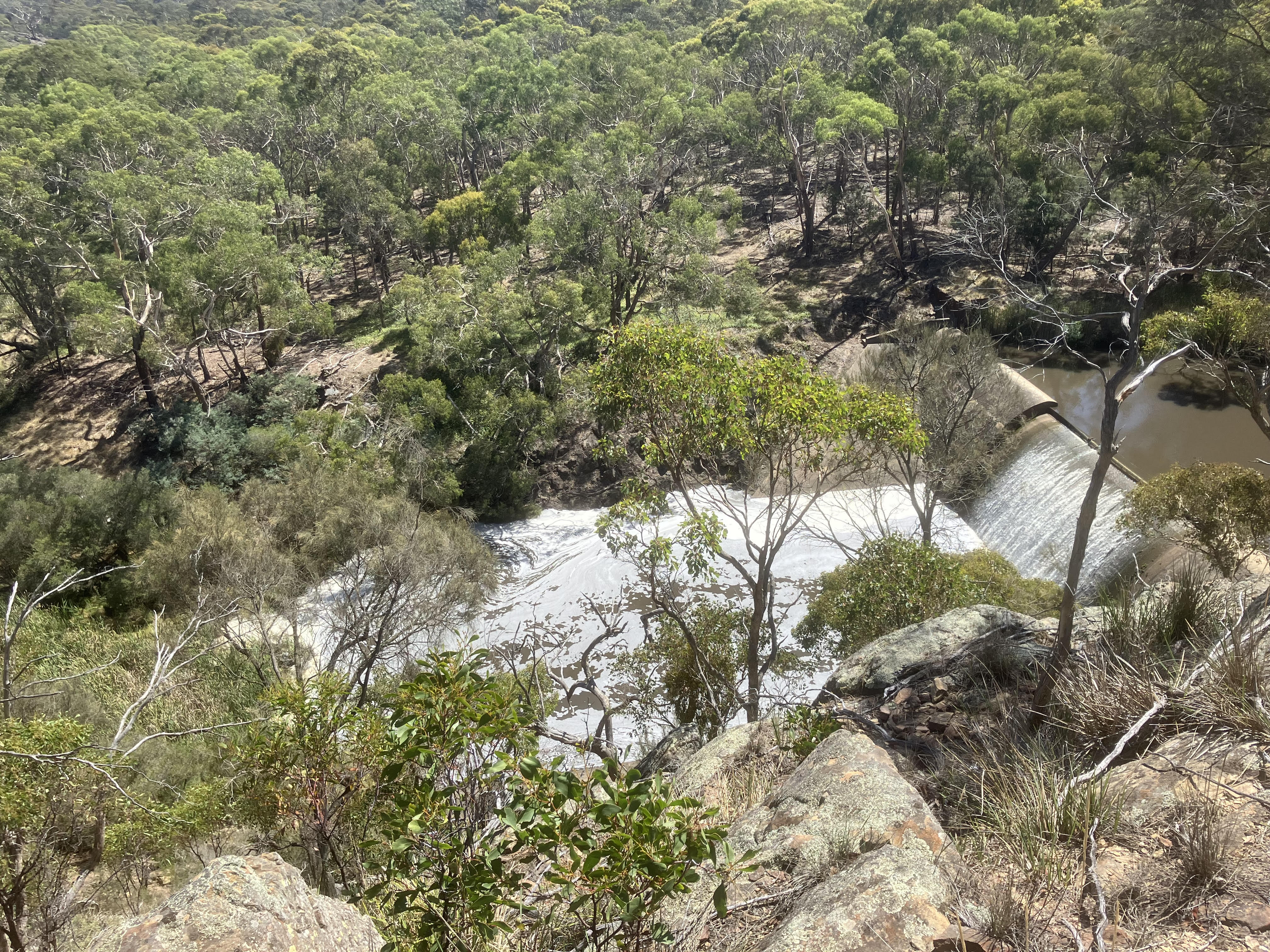
The Weir on the Moorabool River where water is piped into the Moorabool Water Treatment Plant. 50% of samples taken at this location have recorded the PFAS chemical, PFOS between 2021-2024. Two of these samples were higher than the 2025 drinking water guidelines for PFOS. Barwon Water apparently used Granular Activated Carbon (GAC) to remove contaminants in the water at the Moorabool Water Treatment Plant. GAC can successfully treat long chain PFAS chemicals, such as PFOS, but is less successful in removing short chain PFAS chemicals. It is also unclear when GAC was first implemented at Moorabool Water Treatment Plant.
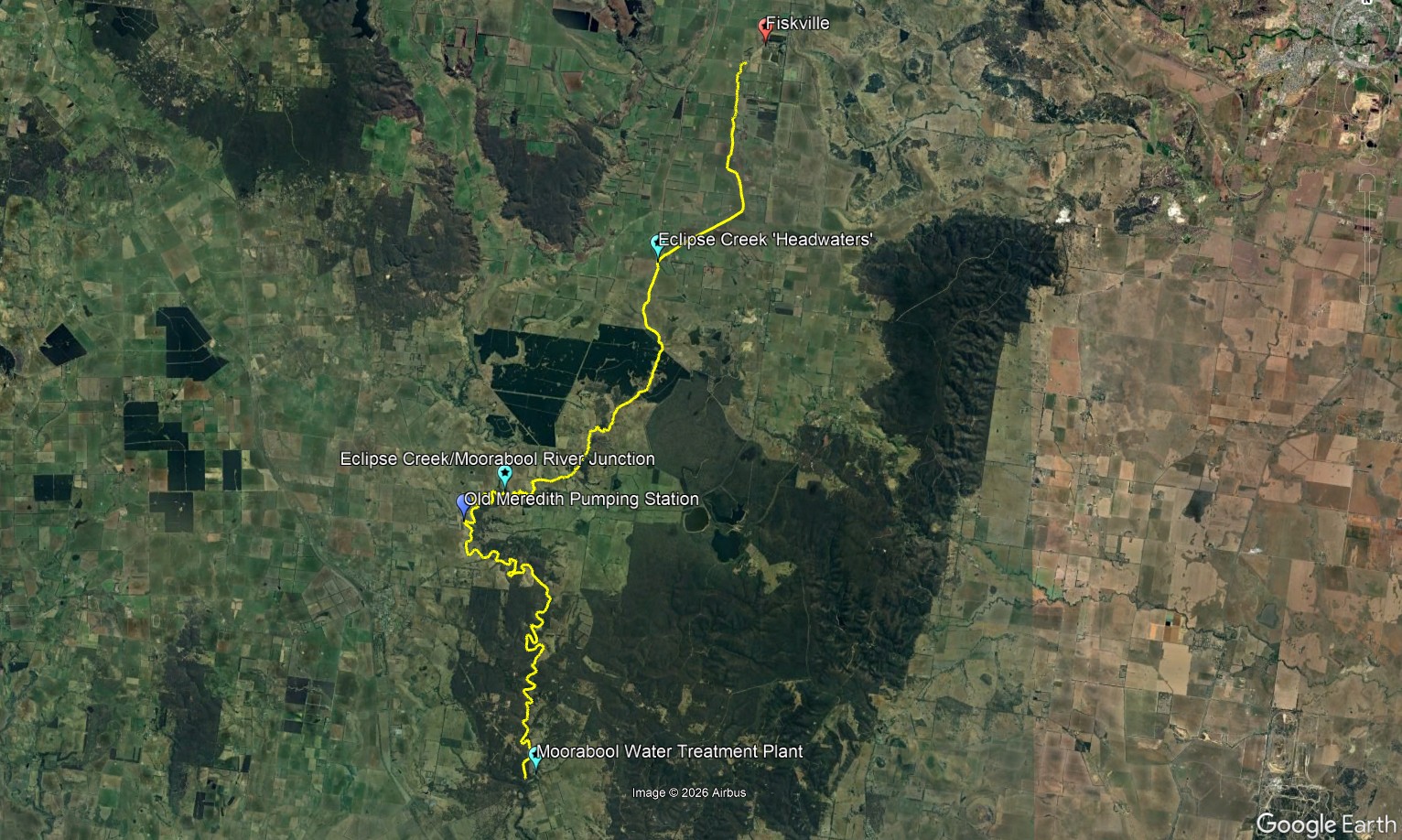
Main flowline route for pollutants from Fiskville entering the Moorabool River and Geelong drinking water supply. Between Fiskville and the Eclipse Creek 'Headwaters', water flows down Beremboke Creek and then agricultural drains. Eclipse Creek flows into the Moorabool River about 10km north of the Moorabool Water Treatment Plant. The main drainage lines from Fiskville and Eclipse creek run dry for periods of time. The greatest PFAS risks therefore will be in times of heavy rain and high flows.
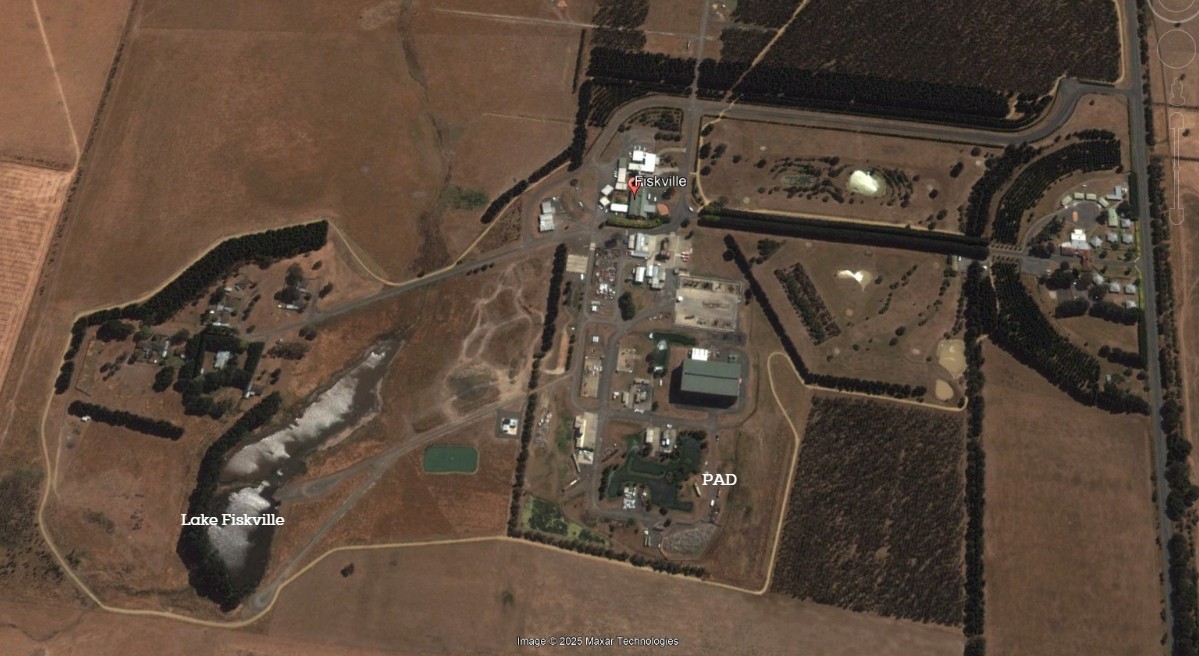
Image of Fiskville in January 2012. Beremboke Creek can also be seen flowing into and out of Lake Fiskville. The PAD drained west into Lake Fiskville.
In June 2012 a draft Barwon Water/CFA report obtained by Freedom of Information by Friends of the Earth in 2015 stated:
"In the 1970s, there was a rudimentary system for collection and treatment of firewater runoff generated in exercises on the Practical Area Drill (PAD). This firewater would have been contaminated by products of combustion, unburnt flammable liquids and fire suppression materials such as foam. Collected runoff was directed via a small, undersized triple interceptor trap to a dam which ultimately drained into a manmade lake – Lake Fiskville. An initial phase of PAD re–development in 1990 enlarged the interceptor trap and established a secondary dam. A second PAD redevelopment completed in 1999, involved sealing of the PAD surface and a shift away from flammable liquids to liquefied petroleum gas (LPG) for approximately 70% of drills on the PAD, and construction of a third dam...
During the first two decades of the operation of the flammable liquids PAD, a risk of off-site contamination from Fiskville related to the discharge of partially treated firewater via Lake Fiskville to Beremboke Creek, which is part of the upper reaches of the Moorabool River catchment. By the late 1990s, this risk had been significantly reduced due to the conversion of the PAD to LPG as the primary fuel and the progressive upgrade of the firewater treatment system.
It is to be expected that PFOS and PFOA residues will have moved off-site via Lake Fiskville, particularly in the years prior to the upgrade of the treatment system. However, these residues would be subject to significant dilution as they moved downstream. Given this and the conclusions summarised above in relation to the relatively low level of risk to human health posed by the recorded levels of PFOS and PFOA, the Investigation believes offsite risks associated with these waterborne contaminants are low to very low..."
"After passing through a triple interceptor trap and Dams 1 to 4, the treated firewater flows to ‘Lake Fiskville’ on Beremboke Creek which flows southwards and forms part of the headwaters of the Moorabool River. The man-made storage Lake Fiskville acts as the final link in the chain of treatment ponds before water leaves the property. Golder Associates concluded that as Lake Fiskville is hydraulically connected to the Moorabool River Catchment, the beneficial uses set out in State environment protection policy “human consumption” and “contact recreation” have the potential to be realised with pathways potentially linking PFOA and PFOS in waters of Lake Fiskville to human receptors downstream. The criteria used are conservative in that they are based on a daily consumption of around two litres of water, which for downstream users will not come from Lake Fiskville alone. Furthermore, dilution of the PFOA and PFOS concentrations in the Moorabool River Catchment following discharge from Lake Fiskville is likely to result in reduced exposure concentrations compared to that reported in Lake Fiskville. In addition, the exposure concentrations may be further reduced via mechanisms of environmental fate and transport..."
Prior to 2016, the dangers of PFAS weren't fully 'understood' and water authorities across Australia were were rather ambivalent about the inherent risks of PFAS. Prior to 2016, there were no drinking water guidelines for PFAS chemicals in Australia. The first PFAS guidelines for drinking water in Australia were published in 2016. Nine years later, the 2016 guideline levels for PFOS had been reduced by 98.6% from 0.5ug/L to 0.008ug/L or 8 parts per trillion. Clearly then, the risks associated by PFAS had been seriously underestimated.
In a separate document also received through FOI Barwon Water concluded in 2012 (note no mention of the Geelong water supply):
"Barwon Water’s own investigations reveal that although drainage water from the Fiskville site could eventually enter the Moorabool River upstream of the offtake that supplied water to Meredith until 2010, the total flow path from Fiskville to Meredith is some 32 km long, and includes several kilometres of grassland area known locally as Mt Wallace Swamp. Given the distance between Fiskville and Meredith, and the nature of the water path, any contaminants leaving Fiskville would be extremely diluted and attenuated along this journey and therefore unlikely to pose any threat to Meredith’s drinking water supply.
This assertion is backed up by a preliminary study of water quality sample results taken at Meredith that show no detectable traces of any contaminants that could possibly have originated at Fiskville."
The first testing for PFAS chemicals in drinking water supplies in Australia was conducted by the Department of Defence in 2006 at the Tindal military base near Katherine in the Northern Territory. The earliest PFAS monitoring in a drinking water catchment by an Australian water authority appears to have been conducted by Hunter Water NSW in October 2009, followed by Melbourne Water in 2011. Almost all water authorities in Victoria, including Barwon Water, didn't start testing for PFAS chemicals until 2017, long after the 'PFAS horse had bolted'. Even now PFAS is regarded as an 'emerging contaminant' even though it has been polluting water supplies for decades.
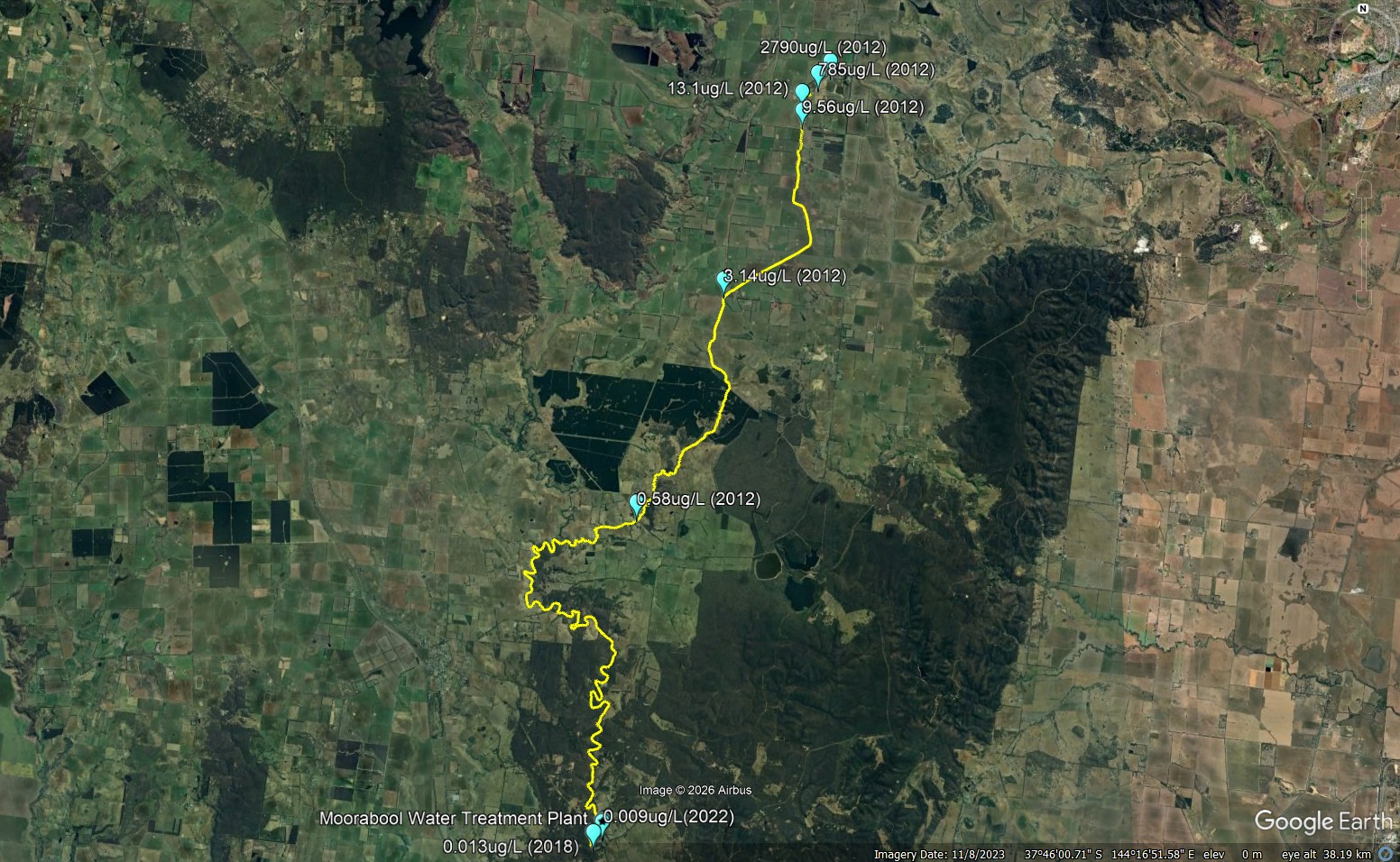
The measurements on the map show the highest levels of PFOS detected by Cardno and Barown Water. The 2018 and 2022 detections were by Barwon Water. The 2025 Australian Drinking Water Guideline for PFOS is 0.008μg/L. When the 2012 samples were taken there was no drinking water guideline in Australia for PFOS. Why hasn't there been a thorough investigation of PFAS loads of the Eclipse Creek/Moorabool River? One testing regime in 2012 just isn't good enough.
In terms of lowering risk to the water quality at Moorabool Water Treatment Plant, the following statement was provided in June 2025 by Barwon Water to the Select Committee on PFAS (per and polyfluoroalkyl substances)
"Mr Cumming : We undertake that for the Moorabool catchment, and we undertake sampling across the Moorabool catchment. As part of our risk assessment process, we identified a small tributary in the Moorabool catchment that had the potential for PFAS because of the location of the Fiskville fire-training facility nearby. We monitor that tributary to assess the PFAS levels and have been liaising with the EPA and CFA regarding remediation of that site. Remediation of that site is the responsibility of the CFA and is regulated by the EPA, but we have stayed in touch in terms of the progress of the remediation. To manage the risk to that tributary—it is a small contributor to the catchment flow, so it is heavily diluted by the time it reaches our offtake areas—we minimise harvesting from our river offtake during wet periods, and that's when this tributary flows. So we're not taking when this tributary is flowing. Like I said before, we've got a diversity of sources, and we take from another source in that catchment that has reservoirs that are off stream and not impacted by the legacy PFAS issues. Also, I should add that the Moorabool treatment plant has granular activated carbon treatment technology, which is known to help reduce PFAS concentrations. We monitor the treated water that is put out by that plant and have never detected PFAS in the treated water."
Note: The small tributary is most likely Eclipse Creek. According to Barwon Water FoI documents there has been no monitoring for PFAS levels at Eclipse Creek.
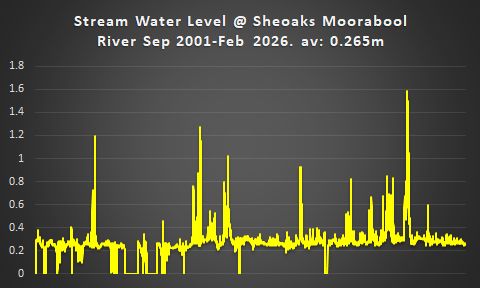
Streamflow as measured by the Department of Energy, Environment and Climate Change at Sheoaks Moorabool (Side ID 232227) averaged 0.265 metres between September 2001 and February 2026. The average streamflow when the 12 PFAS samples were taken by Barwon Water 2021-2024 in raw water was 0.349 metres. Average* streamflow levels when PFAS was detected was 0.391 metres or at streamflow levels 47% higher than the long term average. The two highest PFAS detections in raw water were when streamflow averaged 0.547 metres possibly indicating higher PFAS 'pulses' in times of high flow. (*It is unclear if raw water was tested on the exact day streamflow was measured or if the raw water had been stored off river for some days).
Note: Periods of several months of no flow during the millenium drought 17/10/06 to 7/7/07 & 11/1/08 to 11/8/08.
PFAS results Barwon Water
According to Freedom of Information requests by Friends of the Earth to Barwon Water and the Barwon Water website the following PFAS monitoring has been conducted by Barwon Water in the Moorabool Catchment. No information was provided by Barwon Water for any other PFAS testing in the Moorabool catchment or waterways draining Fiskville.
Testing started in October 2017 (ten years after AFFF ceased being used at Fiskville) at Moorabool treatment plant on a monthly basis for almost 5 months, then ceased for a period of 6 years. Testing in the raw water from the Moorabool started in August 2021 for a period of 3 years. The highest amount detected of a PFAS chemical was 0.029μg/L on 15/1/18 for the chemical 6:2 FTS. There is no Australian drinking water guideline for 6:2 FTS.
The other complicating issue is the guidelines for PFAS chemicals in drinking water. In 2016 the first guideline for PFOS was set at 0.5μg/L. In April 2017 that guideline was reduced by the National Health and Medical Research Council (NHMRC) to 0.07μg/L for PFOS+ PFHxS. In June 2025 the PFOS guideline was reduced again to 0.008μg/L, with PFHxS at 0.03μg/L. Barwon Water detections from 2017 through to December 2024 were well under the 0.07μg/L PFOS+PFHxS NHMRC guideline at that time. Because of this, PFAS chemicals detected in the Moorabool River were probably not considered to be at high enough levels to warrant serious attention. There have been three instances where PFOS has breached the 2025 guideline level (highlighted in red below). Generally speaking if a contaminant such as PFAS is detected in raw water at levels exceeding the Australian Drinking Water Guidelines, then it is recommended that the water authority implement testing of treated water.
| Date | Location | Streamflow (metres) | PFOS μg/L | PFHxS μg/L | 6:2 FTS μg/L |
| 27/10/17 | Moorabool Combined Pre-Treatment | 0 | 0 | 0 | |
| 14/11/17 | Moorabool Combined Pre-Treatment | 0 | 0 | 0 | |
| 18/12/17 | Moorabool Combined Pre-Treatment | 0 | 0 | 0 | |
| 15/1/18 | Moorabool Combined Pre-Treatment | 0.013 | 0 | 0.029 | |
| 7/3/18 | Moorabool Combined Pre-Treatment | 0 | 0 | 0 | |
| 18/8/21 | Moorabool Raw Water | 0.412 | 0.009 | 0.007 | 0 |
| 27/8/21 | Moorabool Raw Water | 0.392 | 0.004 | 0.003 | 0 |
| 1/4/22 | Moorabool Raw Water | 0.285 | 0.003 | 0 | 0 |
| 17/6/22 | Moorabool Raw Water | 0.308 | 0 | 0 | 0 |
| 7/10/22 | Moorabool Raw Water | 0.683 | 0.009 | 0.005 | 0 |
| 31/12/22 | Moorabool Raw Water | 0.307 | 0.006 | 0 | 0 |
| 31/3/23 | Moorabool Raw Water | 0.268 | 0.002 | 0 | 0 |
| 27/6/23 | Moorabool Raw Water | 0.316 | 0 | 0 | 0 |
| 21/9/23 | Moorabool Raw Water | 0.308 | 0 | 0 | 0 |
| 21/12/23 | Moorabool Raw Water | 0.297 | 0 | 0 | 0 |
| 5/3/24 | Moorabool Raw Water | 0.271 | 0 | 0 | 0 |
| 8/5/24 | Moorabool Combined Pre-Treatment | 0.0016 | 0 | 0 | |
| 16/6/24 | Moorabool Raw Water | 0.349 | 0 | 0 | 0 |
| 30/7/24 | Moorabool Combined Pre-Treatment | 0 | 0 | 0 | |
| 23/8/24 | Moorabool Combined Pre-Treatment | 0 | 0 | 0 | |
| 19/9/24 | Moorabool Raw Water?/Moorabool Combined Pre-Treatment | 0 | 0 | 0 | |
| 23/10/24 | Moorabool Combined Pre-Treatment | 0 | 0 | 0 | |
| 20/11/24 | Moorabool Combined Pre-Treatment | 0 | 0 | 0 | |
| 17/12/24 | Moorabool Combined Pre-Treatment | 0.002 | 0 | 0 | |
| 24/1/25 | Moorabool Combined Pre-Treatment | 0 | 0 | 0 | |
| 19/2/25 | Moorabool Combined Pre-Treatment | 0 | 0 | 0 | |
| 17/3/25 | Moorabool Combined Pre-Treatment | 0 | 0 | 0 |
Barwon Water has also tested treated water from Moorabool Water Treatment Plant for PFAS chemicals ten times starting from the 8th of May 2024. Testing appears to occur once a month and all results have shown no detections of PFOS, PFHxS, PFOA and PFBS.
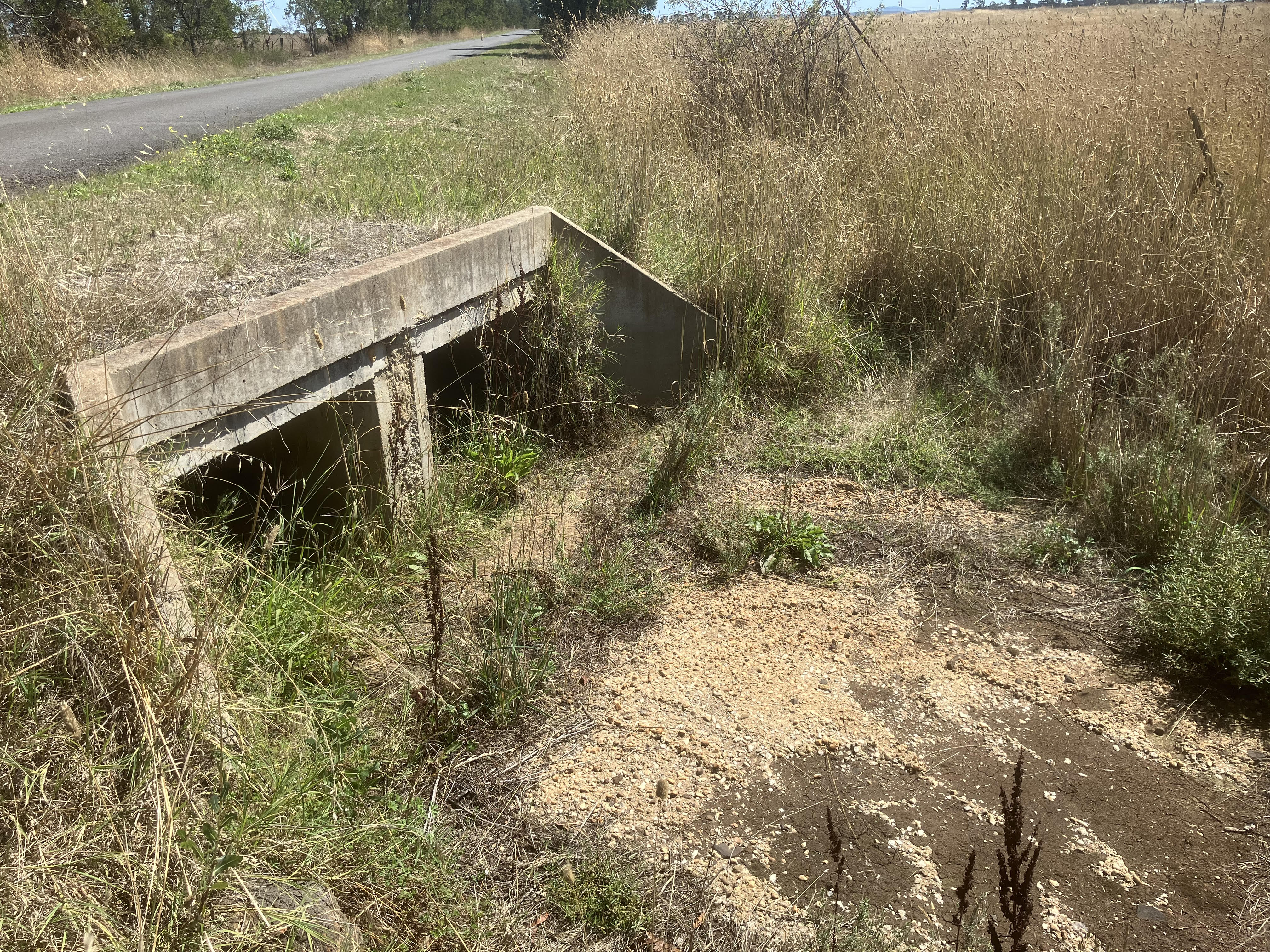
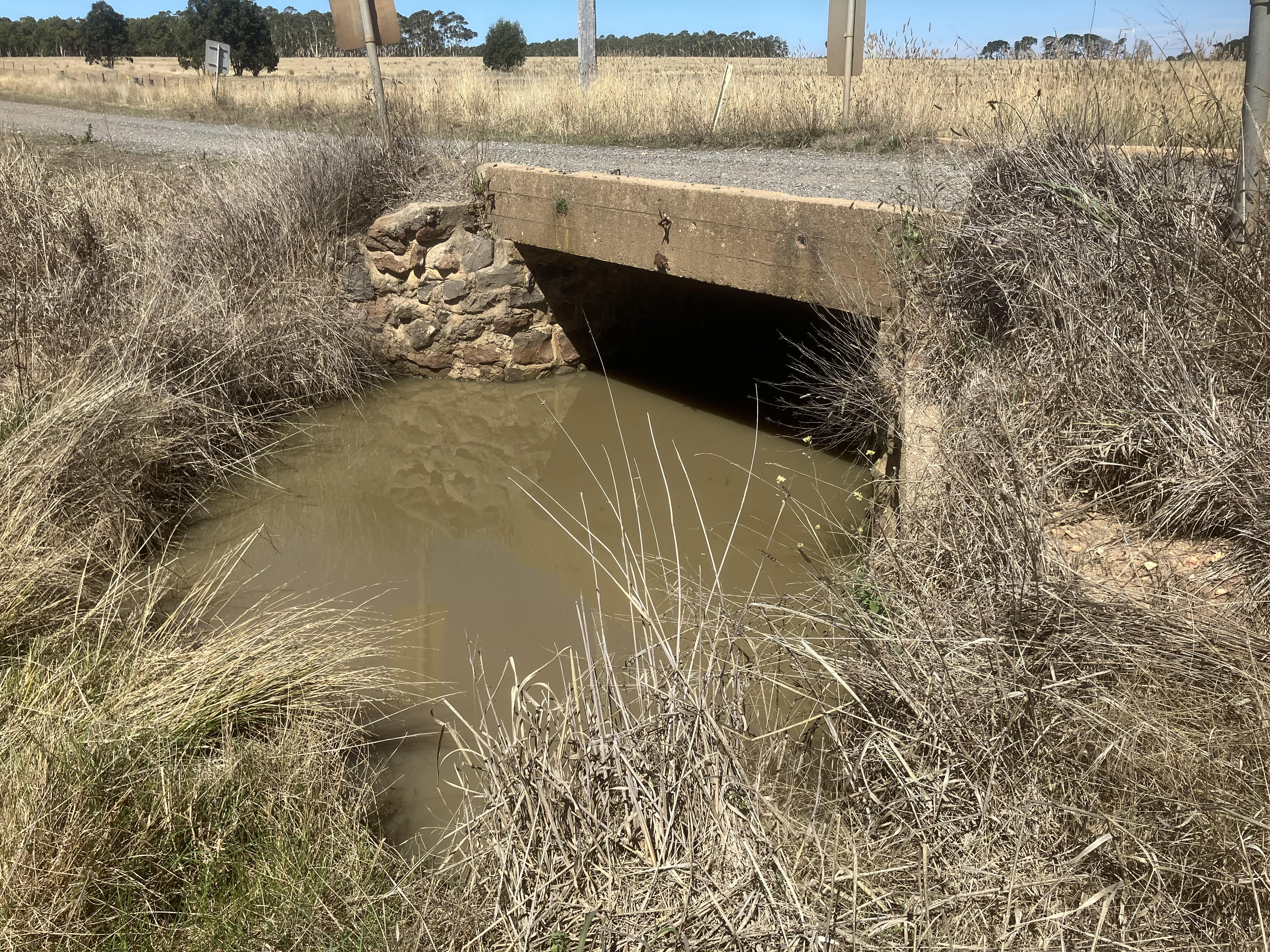
Culvert under Mount Wallace-Ballark Road near where PFOS was recorded at 3.14μg/L in 2012 with sediment at 11μg/kg. The drainage channel probably runs dry for large sections of the year. In terms of PFAS transport, wet weather events will be the highest risk for mobilisation of PFAS. Does PFAS in this dry drainage system become windblown in times of no flow?
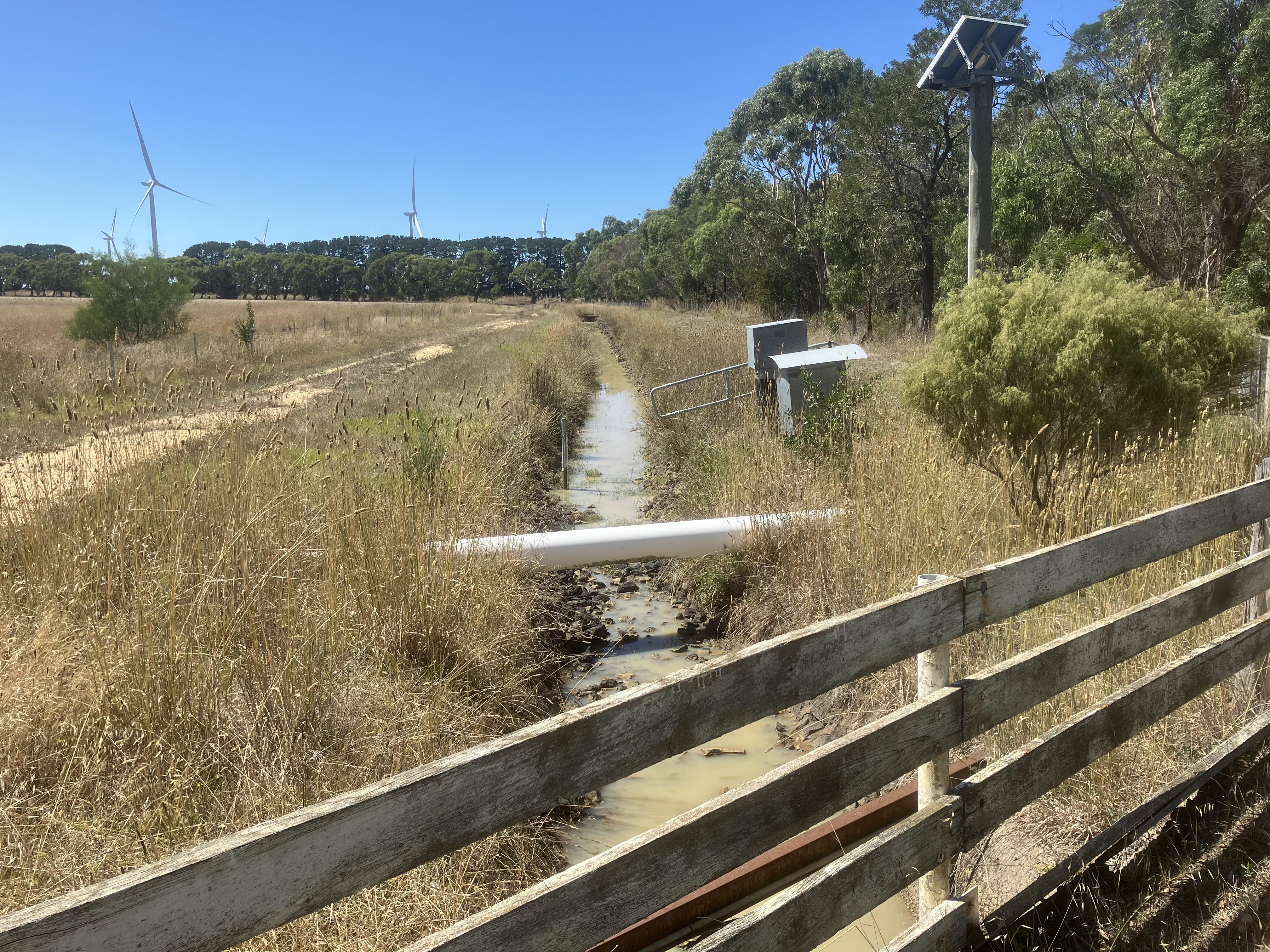
Mount Wallace-Ballark Road. Two drainage systems occur at this location. The 'Fiskville' drain/channel was running dry when this photo was taken. The channel next to the main drain/channel is the Bostok Channel which was flowing and runs alongside the 'Fiskville' drain/channel for ~200 metres at this location. It is unlikely that these two systems are connected. (Also see image below)
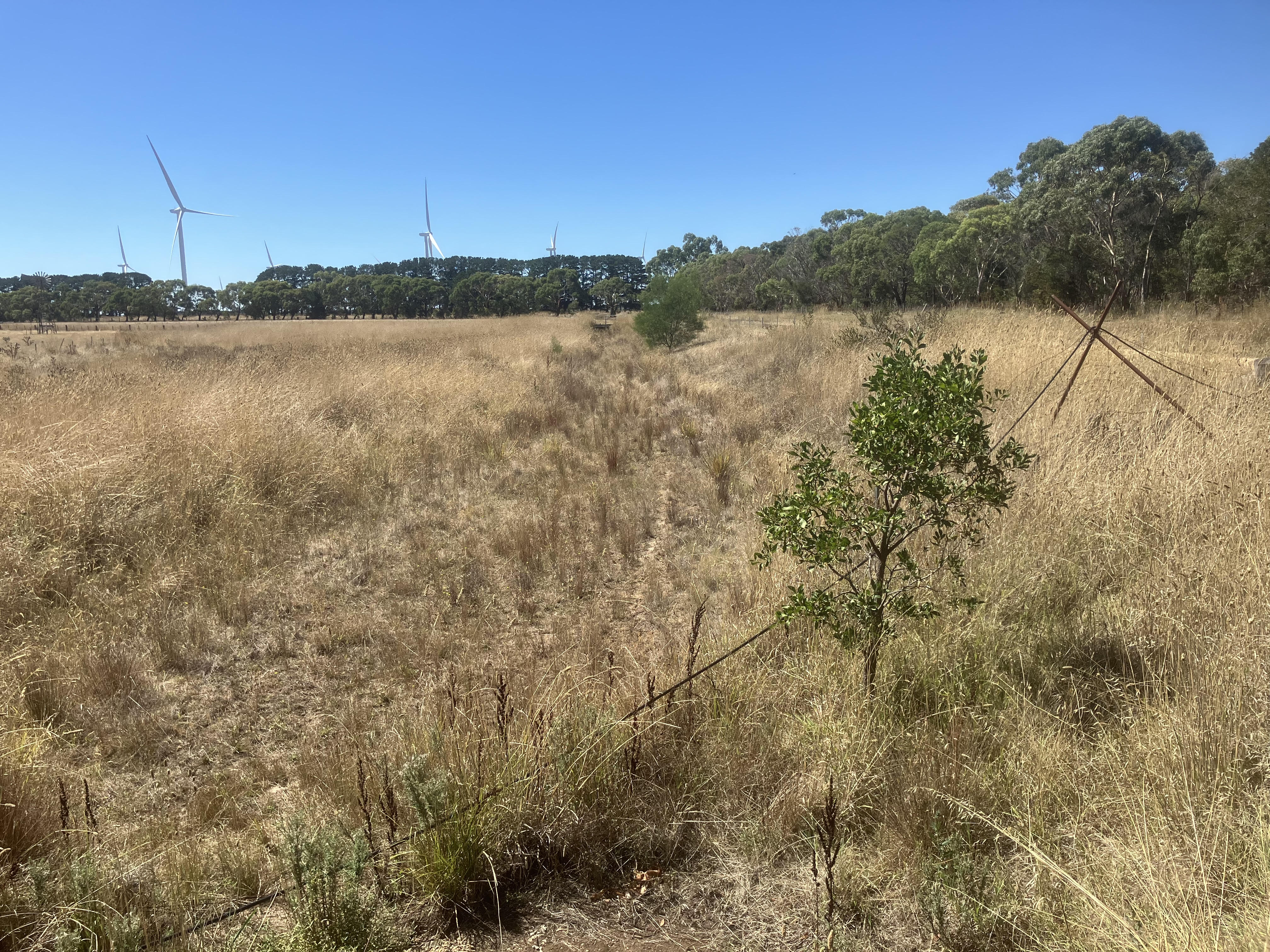
A dry 'Fiskville' drain/channel running alongside Bostok Channel. Farm dams are supplied with water from this channel in times of wet weather.
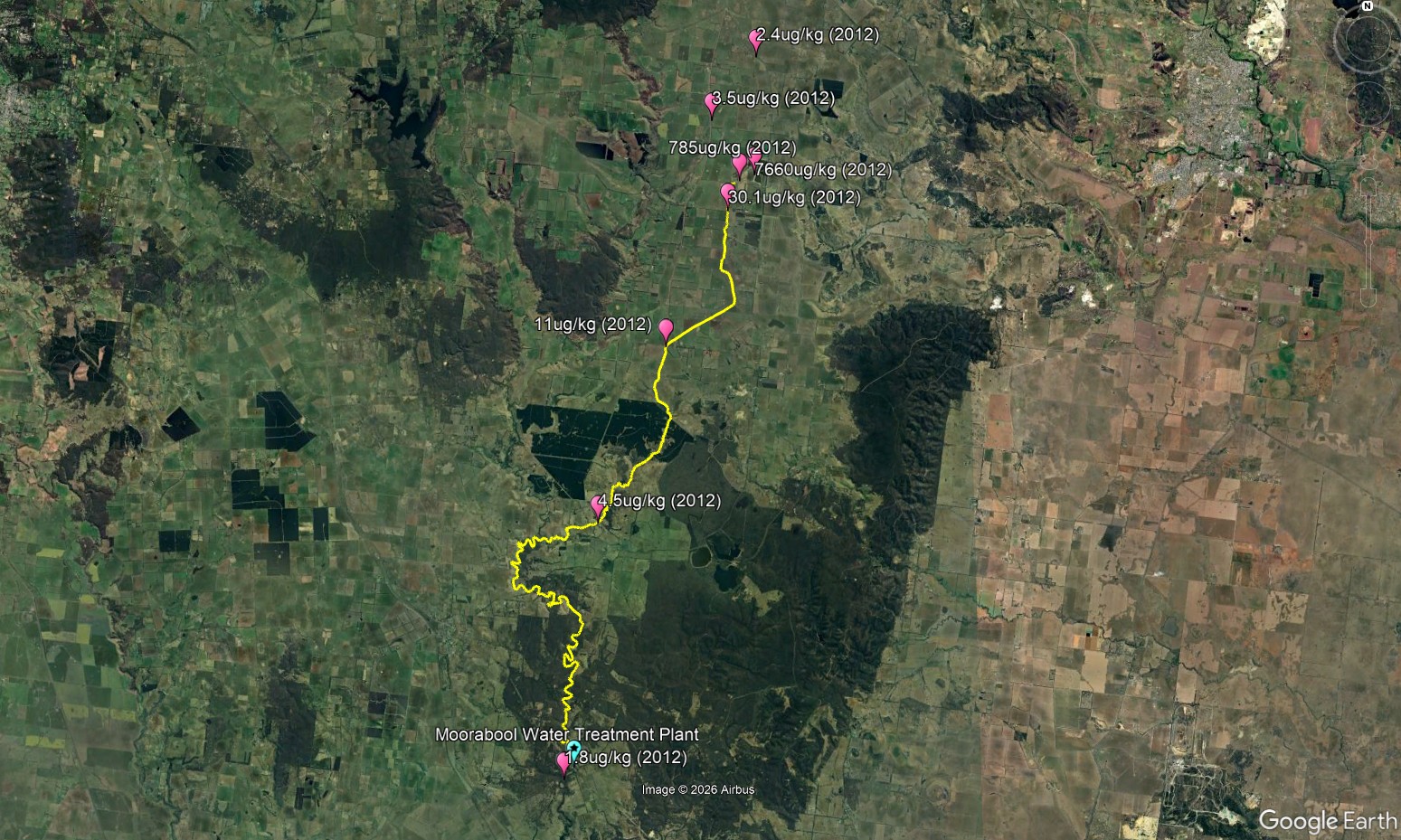
Highest PFOS in sediment detections 2012, with 7660μg/kg detected at Fiskville. Contaminated sediment can be transported into the water column in times of high flow. The Fiskville site itself may have been remediated by 2021, but how will areas offsite be remediated? It is interesting to note that PFOS was detected in sediment north of the Fiskville site. What was the source of this contamination? Wind blown particles from Fiskville perhaps. PFOS was also detected in sediment south of the Moorabool Water Treatment Plant in 2012 confirming PFAS contamination of the Moorabool system downstream of Moorabool Water Treatment Plant in 2012, five years before Barwon Water started monitoring for PFAS.
Culvert under Hamills Lane - Beremboke Creek near where PFOS was recorded at 9.56μg/L in 2012 and sediment at 30.1μg/kg.
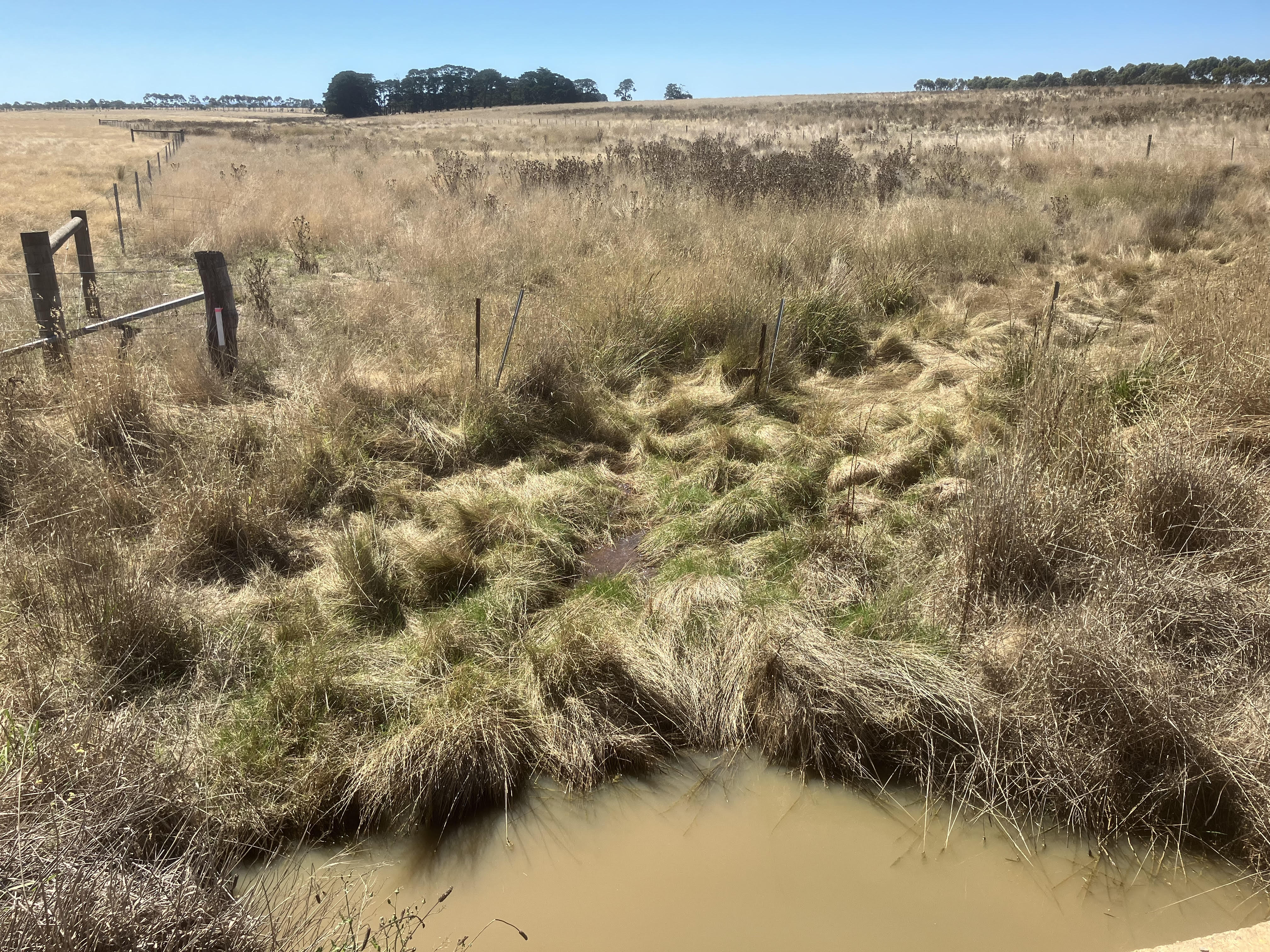
Looking north from Hamills Lane - Beremboke Creek with clear signs of where the water flows. Just over 1km south from the Fiskville site.
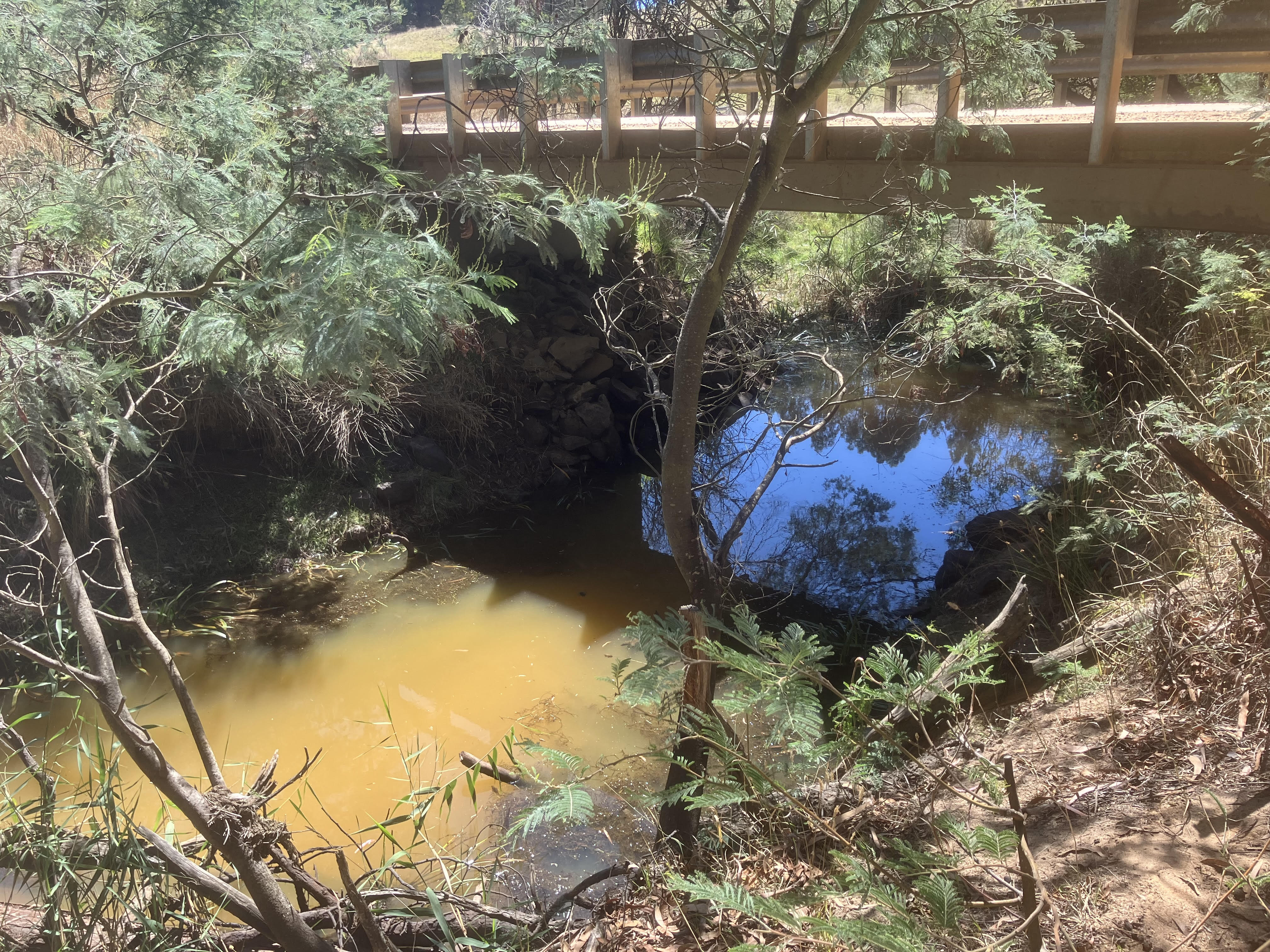
Eclipse Creek flowing under bridge on Whinray Road. PFOS was detected at this location in 2012 at 0.58μg/L, with sediment at 4.5μg/kg. This site is approximately 4km upstream of the old water offtake for the community of Meredith with much of the creek appearing to have little to no water in it when this photo was taken.
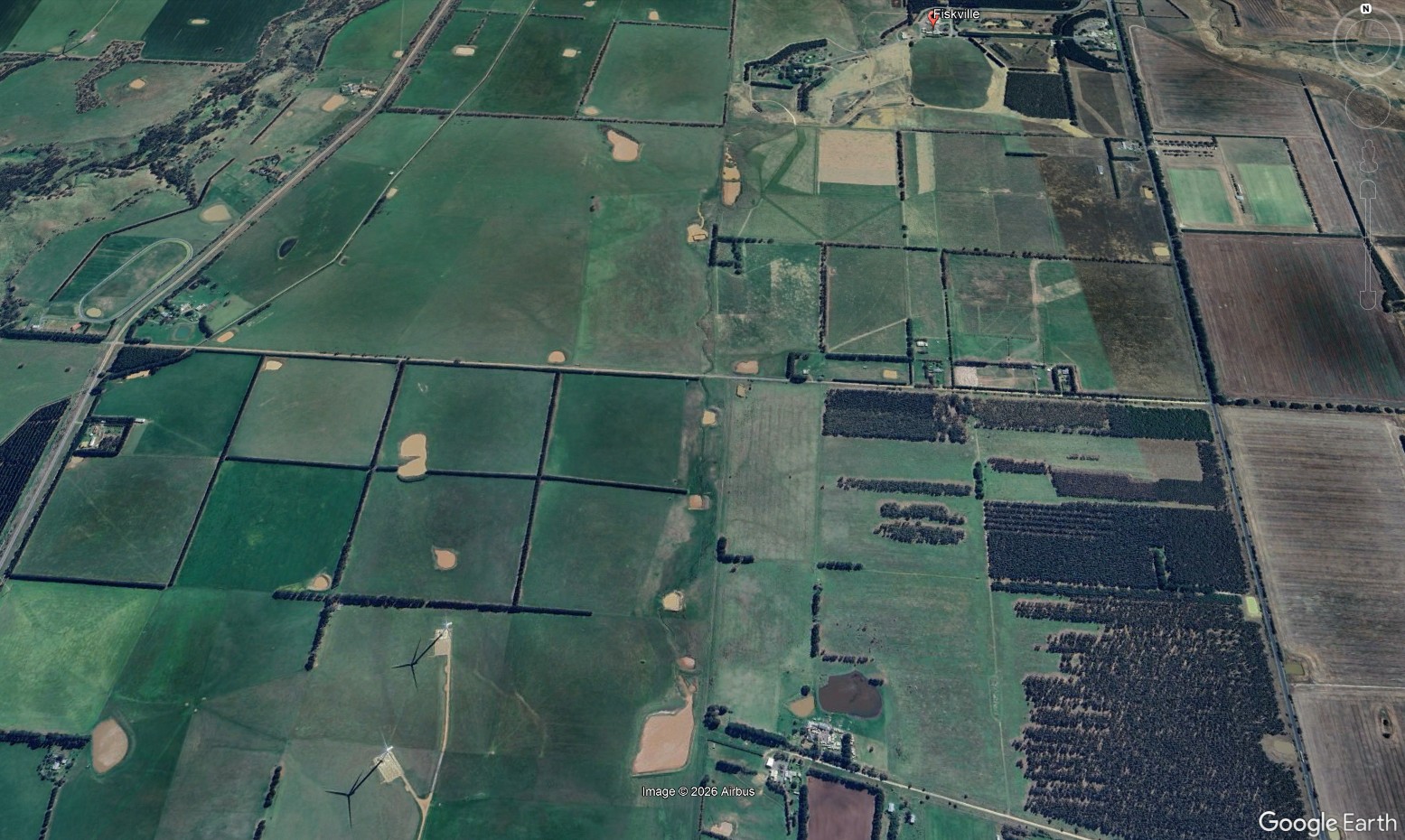
Beremboke Creek 2.5km downstream of Fiskville, has a number of dams that would probably slow the spread of PFAS somewhat before reaching the main agricultural drains. What are the PFAS levels in these dams and sediment in the dams? Remediation of Fiskville did not include remediation of these dams.
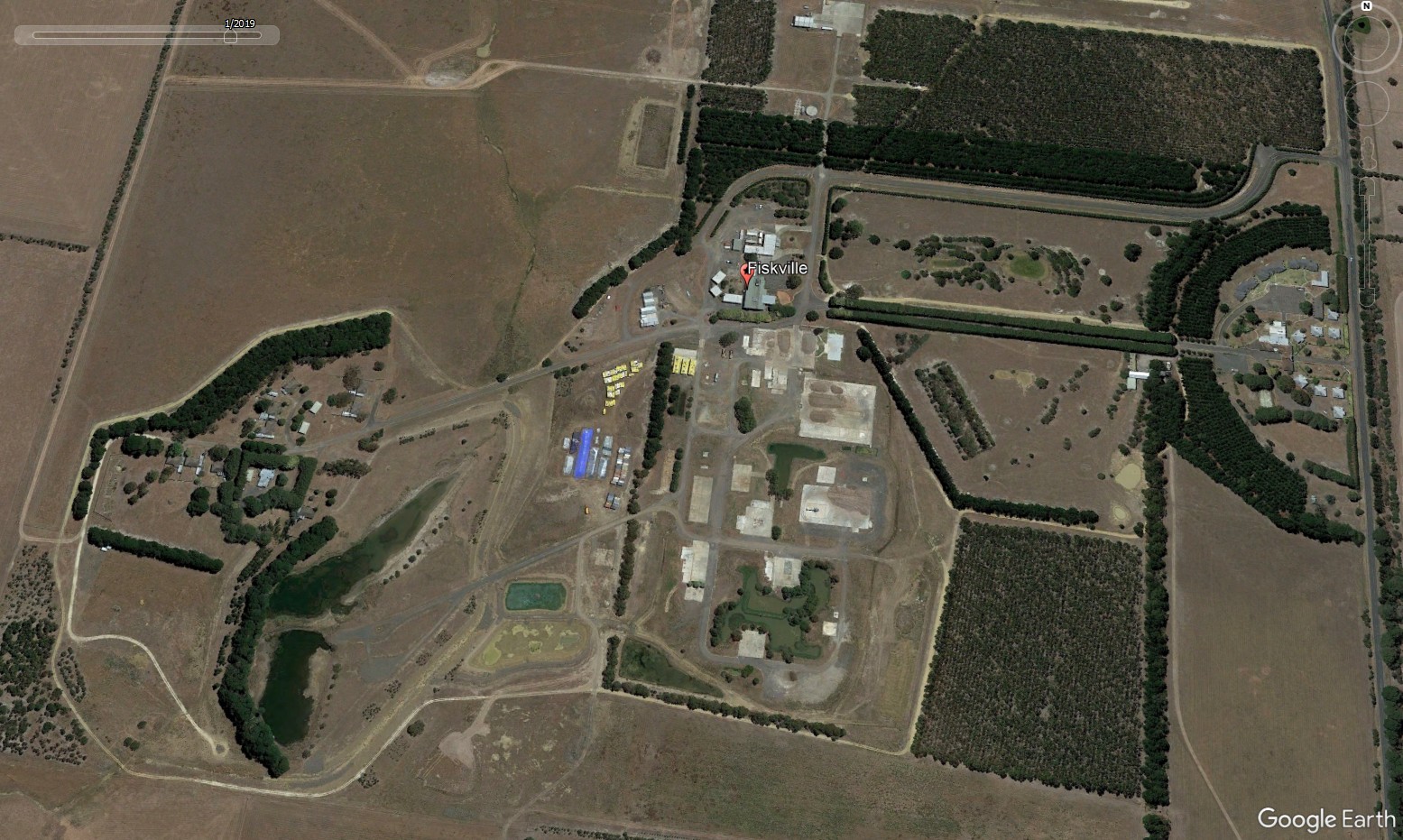
Image of Fiskville in 2019 with remediation occurring. Remediation included use of a PFAS treatment plant which was given approval to discharge treated water back into the environment. Beremboke Creek was also diverted away from Lake Fiskville.
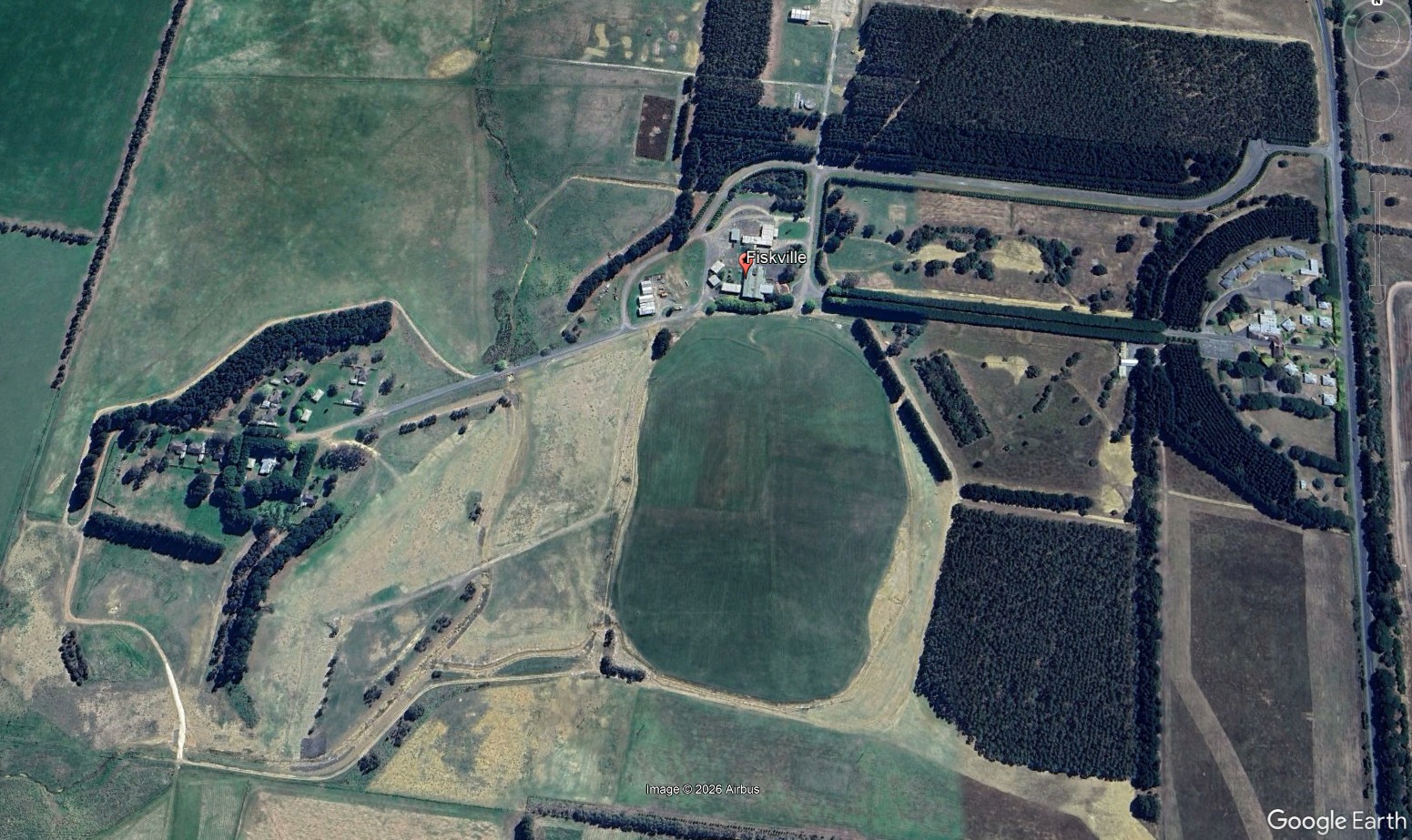
The most recent Google Earth image, shows that Lake Fiskville has been remediated with Beremboke Creek also diverted. The huge PFAS loads that were leaching PFAS into the environment from Fiskville have now ceased, but decades of PFAS residues offsite are likely to remain in the environment for many years. PFAS chemicals are known as 'forever chemicals'
Friends of the Earth is considering undertaking PFAS testing at some sites in Victoria in the near future. If you feel inspired to make a donation you can do so here.
For further information contact [email protected]