
Effective climate resilience initiatives are essential for keeping communities safe. These can take many forms, such as preparing for and adapting to the changing climate and its impacts.
In June, we facilitated a Community Resilience Mapping Workshop for the Anglican Diocese of Gippsland. The workshop produced valuable ideas for community members and clergy in their respective communities, parishes and across the Gippsland Diocese.
This event took place on the lands of the Gunaikurnai people. Act on Climate respects Gunaikurnai Elders, past, present and emerging, and acknowledges that sovereignty was never ceded. First Nations justice and climate justice go hand in hand, and we join First Peoples’ calls for Truth, Treaties and Justice.
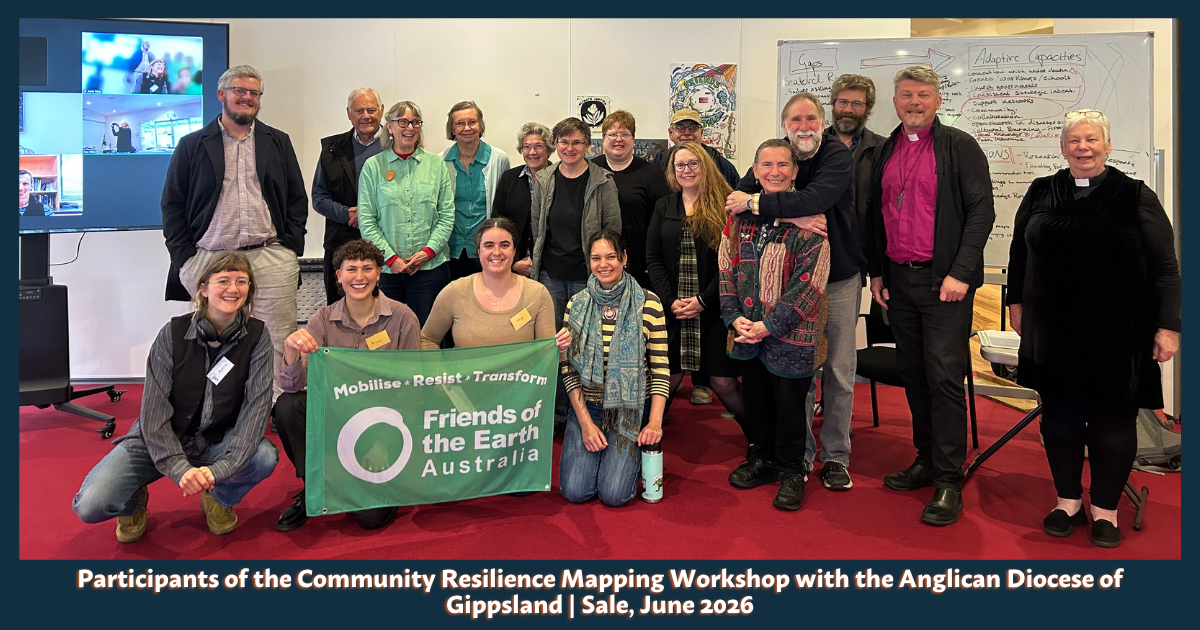
What is Community Resilience Mapping?
Community Resilience Mapping helps communities understand their unique challenges and strengths, the climate impacts they’re most at risk from, and who is most at risk, so they can implement appropriate adaptive solutions. Through facilitated brainstorming, these workshops help inform adaptation and emergency response plans and the prioritisation of time and resources. They aim to distil practical community-led solutions and knowledge, so community members can stay safe while navigating these new challenges. It centres the expertise and skills of communities and builds upon existing networks.
Identified Exposures
The main exposures brought up and causing concern in/for Gippsland are:
- Bush and grassfires
- Extreme heat
- Biodiversity, ecosystems and ecological health
- Sea-level rise and flooding
Other climate impacts and exposures the community noted included coastal erosion, extreme weather events, floods as well as drought and subsequent food insecurity, uncertainty/under preparedness of governance and overdevelopment.
The group acknowledged that all of these climate impacts compound with other impacts and are part of a greater polycrisis, and the breadth of impacts on the community (social, economic, health) and biodiversity and compounding scenarios (such as pandemics) were discussed.
After identifying the climate impacts participants were most concerned about (bullet points above), we formed working groups, each focused on one impact to discuss the strengths, sensitivities and adaptive capacities of the community.
Some key strengths identified across the impacts were:
- Good communication networks exist in the parishes
- Communication and phonetrees, which can be utilised for disasters
- Local knowledge of Traditional Owners and farmers
- First Nations cultural burns are huge asset to heal Country and reduce risk
- UCC chaplains
- High levels of volunteerism within the Anglican church, across different organisations and causes
- Church buildings are great as heat shelters/refuges
- Care for Creation: culture of providing for wildlife/ecosystems
- The Anglican Church is a voice on social justice and politics
- Church members uphold a culture of service and advocacy
- Strong connections throughout Gippsland
Some key sensitivities identified across the impacts were:
- Ecosystems and native flora at risk
- Infrastructure deficits and the maintenance of escape routes
- Unequitable distribution of funding
- Exacerbation of existing barriers to community access
- Inadequate housing and insulation
- Lack of information on where to seek shelter, who to contact etc.
- Impacts on industry, including tourism, fishing, dairy, farming/food, employment sectors
- Spiritual and Indigenous connections to Country, including sacred sites at risk
- Trauma and grief risk from disaster experiences and loss of place, general mental health risks
- Stress on the health sector and health service providers
Community members identified as most at risk:
Across all groups, community members identified as most at risk (in no particular order):
- Outdoor workers including farmers
- Geographically isolated people
- People with disabilities and people living with (mental) health conditions
- (Climate) refugees
- Unhoused people
- Aged people/aged care facilities
- People with less access to financial resources
- Young children
- Uninsured people
Gaps and Adaptive Capacities
In the final brainstorm, the group discussed gaps in climate and disaster preparedness across the key impacts (fire, heat, ecological health, sea level rise).
Gaps
Discussions highlighted a perceived gap in community members' knowledge, education and experience of how to address and prepare for climate impacts, which are often new or intensified. Skill and knowledge sharing among the group and beyond was identified as a pathway to addressing this gap, as well as valuing local First Nations knowledge.
Another issue addressed by the group was the short-term view that is often prevalent in politics, which results in a lack of adequate and ongoing funding. The group identified that they can address this by adopting long-term strategies and engaging with climate change consistently and continually.
Adaptive Capacities
Building on these gaps, adaptive capacities (the ability to address and overcome these gaps while building on existing strengths) were identified and some key actions proposed.
‘Do what we can - the best we can! Our biggest asset is community!’ was a motto brought forward by one of the working groups.
- Spirituality can be seen as a resilience dimension within the community
- Prevent the siloing of resilience and individualising vulnerability, instead strategically and consistently engage on resilience and adaptation
- Connections to wider religious network can be harnessed
- Preparing networks for coordinated responses and strengthening support networks
- Skillshare/practical information within the community can be used to address adaptation and resilience
- Use existing platforms (service, schools, events) can be harnessed to engage and involve community members in preparedness conversations and actions
- Mutual aid and community care can be better prepared to support communities before, during, and after crisis
- Churches' physical assets can be strengthened
- Churches as disaster relief centres
- Churches as cool places
- More value placed on local knowledge for localised solutions and supporting First Nations leadership
- ACTing (Acting for Creation Together in Gippsland) is a huge asset that can be used and shared more widely
Next Steps
Several key actions emerged from the adaptive capacities brainstorm, which were great starting points to strengthen resilience, adaptation and disaster preparedness and response. For example, determine how physical assets can be strengthened (Disaster relief shelters, cool places - churches and schools)
Conclusion
The group's Christian values were central to how resilience and climate adaptations were discussed. Community and looking after each other within the Church was identified as a key strength, and foundational to keeping each other safe. The group identified that the Church's physical assets can be used more strategically to support the wider community during disasters, like opening church buildings during extreme heat. The group noted the importance of local and Indigenous knowledge in preparing for and mitigating disasters, as well as the value of intergenerational knowledge sharing. The attendees of the workshop already held knowledge and experience and are well positioned to continue the conversation and realise the key actions identified.
Want to map your community's resilience?
Adapting to the climate crisis starts at the community level. Coming together to vision our future is an essential part of preparing for the ongoing effects of climate change. What does adapting to a changing climate and building resilience look like in your community?
We're offering support to anyone who wants to facilitate Resilience Mapping in their own community.
Check out our Community Resilience Mapping Facilitation Guide, which you can use to guide the running of your own event, and read until the end for more information. This activity was adapted from the Climate Resilience Project.
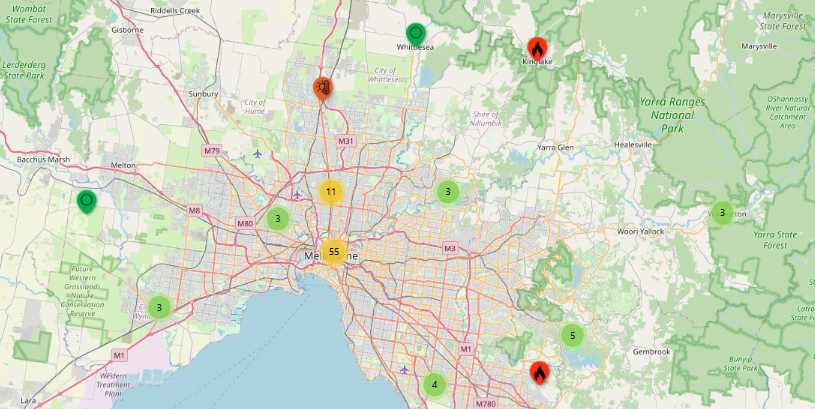 See what initiatives are already happening around you. Know of a climate adaptation or resilience project that isn’t on the map yet? Submit a request for it to be added here.
Together we can help prepare communities for now unavoidable climate impacts!
Get in touch if you'd like to get involved or hear more about what we're doing:
- Kimmi Bebendorf: [email protected], or
- Kim Croxford: [email protected]
Support the Act on Climate collective!
Want to help ensure we can continue doing the vital work of preparing Vic communities for climate impacts? Please help us continue our work preparing communities for locked-in climate impacts by making a once-off donation or signing up for monthly donations and becoming a member of AoC.
Act on Climate is actively bringing together people around Vic preparing their communities, generating impactful adaptation from the grassroots, while pressuring the Vic Gov to adequately fund community-led climate adaptation.
Remember, you're always welcome to join Act on Climate's weekly meetings.
All meetings include dinner (cooked by a lovely collective member). Register here for an upcoming Tuesday.