
Longford Gas Plant located 15km south east of Sale in Gippsland, is the main receiving point for gas and oil pumped in from Bass Strait. Longford consists of three gas plants (GP1, GP2 and GP3) and one crude oil stabilisation plant. It has been operating (and polluting) since 1969.
Almost all of Victoria's gas requirements come from Longford. It also provides gas to Tasmania and New South Wales. It is extremely important to Australia and over 40 years has produced 54% of Australia's liquids and crude oil. Crude Oil and LPG Gas are also piped to Long Island Point (at Hastings on Westernport Bay) from Longford for further processing. Gas is also processed at Longford and distributed to Victoria's gas network.
A few years ago, Longford processed 37,700 barrels of LPG per day and 188,000 barrels of crude oil per day.
On the 25th of September 1998, a pressure vessel ruptured at GP1 causing a disastrous 2 day fire. The fire killed two workers and injured eight others. Victoria's gas supply was disrupted for 3 weeks. Costs of property losses at the plant amounted to over $400m with additional losses of $1.3b to businesses that were impacted through loss of gas supply. PFAS loaded Aqueous Film Forming Foam (AFFF) was used to suppress the fire.
The area impacted by the fire included the Crude Oil Stablisation Plant. An Esso employee claimed that fire fighting foam was knee-deep in places with other reports it was a foot deep in the control room and was also observed floating in the south pond. Large amounts of AFFF were used on the 1998 fire and the ash and debris from the fire spread throughout the plant. Pollution from the fire was excessive. The use of PFAS during this disaster and PFAS used at the plant between 1969-2017 has caused environmental pollution that will not be resolved for hundreds of years.
Use of AFFF containing PFAS was apparently stopped at Longford in 2017 (although Esso have claimed that it stopped in 2007) after a progressive phase out beginning in 2005. Fire trucks and other systems on Longford that used AFFF were cleaned out of AFFF in 2018 and 2019.
Esso was monitoring for PFAS as early as 2012 (14 years after the fire) in two groundwater bores on the site. The priority for cleanup however, after the 1998 fire was asbestos, not PFAS.
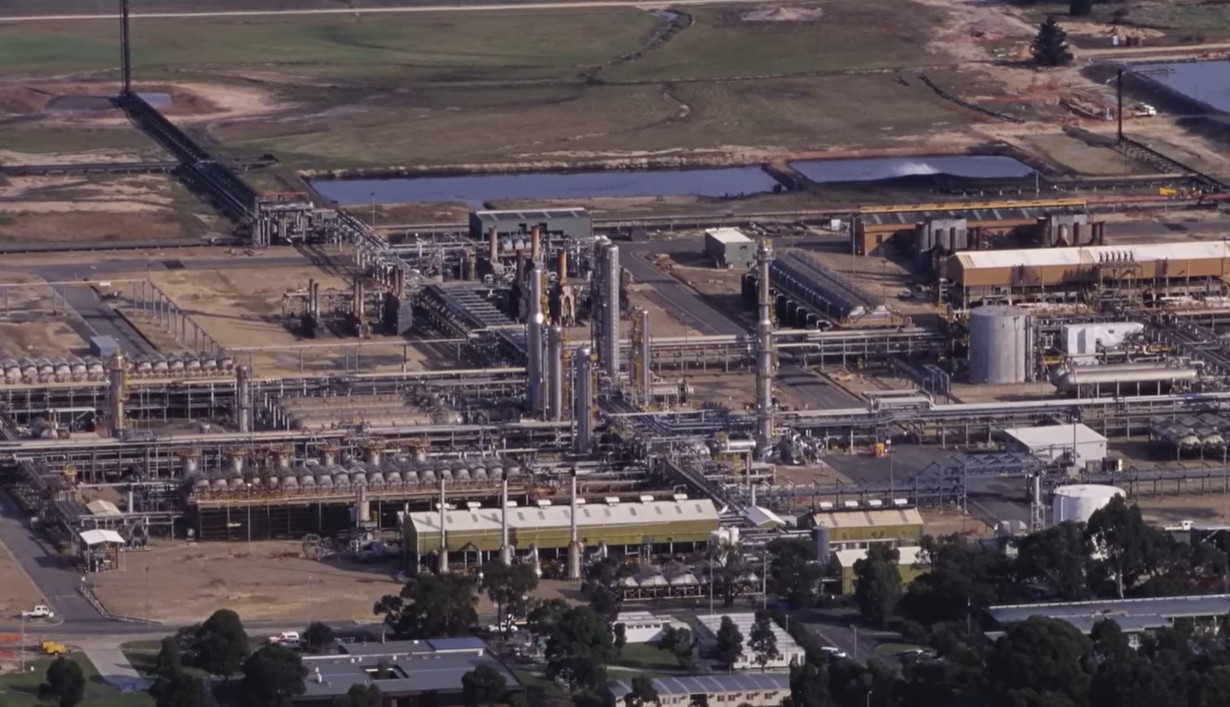
The Longford Gas Plant has also been a major emitter of carbon dioxide into the atmosphere for decades. Image: Plainly Difficult. The plant was owned by ExxonMobil, but was recently taken over by Woodside.
Both gas and oil go through a complicated engineering system that separates the gas and oil. The Longford plant receives oil and gas from Bass Strait oil rigs via two pipeline corridors. Gas extraction produces Methane, Ethane, Propane, Butane and water. During its pipeline journey, the water and hydrocarbons become dense and form condensate slugs in the bottom of the pipes. These slugs contain energy. At the plant these slugs are caught by slug catchers which separate the water from the gases. This is done at the 3 gas plants. The hydrocarbons then pass through an inlet separator in each plant which removes free water. The gas then goes through molecular sieves in each plant to remove hydrogen sulfate and water molecules.
Five Clean Up Notices at Longford were issued by the EPA between 2017 and 2018 with 40 separate studies/documents reviewed by an environmental auditor. Numerous contaminants were found during the audit process with PFAS pollution being the most significant. Other contaminates included: gross alpha and gross beta emitting radionuclides, ammonia and dioxin above adopted criteria. Sulphide, nitrate, Total Recoverable Hydrocarbons, benzo(a)pyrene and 2,4-Dimethylphenol were also detected above Limit of Reporting.
The gas plant has been responsible for PFAS contamination of the regional aquifer groundwater (Boisdale Formation), mainly under the site to a depth of 20 metres to 34 metres. This pollution cannot be mitigated. The PFAS polluted groundwater is migrating offsite in slow moving plumes. 85% of water samples from the Boisedale Aquifer tested positive for PFAS with eight detections exceeding criteria. It appears that groundwater is also moving in an easterly direction towards Lake Reeve (part of the RAMSAR listed Gippsland Lakes) at the rate of 0.2 metres/year to 2.3 metres/year. PFAS contaminated groundwater from the plant probably won't reach Lake Reeve for hundreds of years. PFAS polluted surface water from Longford has polluted the RAMSAR listed Lake Reeve (probably for years) both from the Carr Creek entrance to Lake Reeve 12km south east of Longford Plant and also most likely from the Esso Saline Holding Pond, managed by Gippsland Water, located 11km south east of Longford.
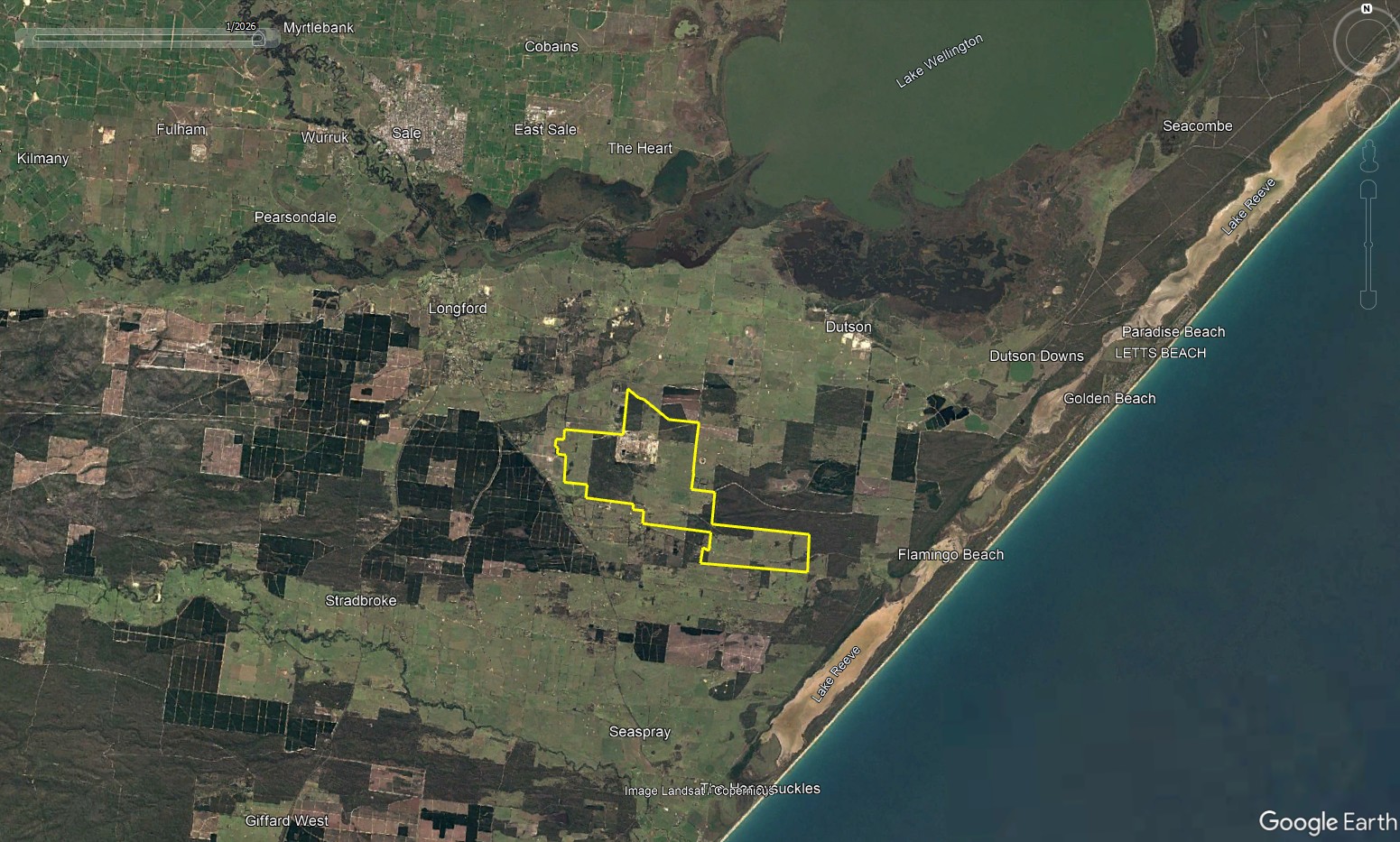
Location of Longford Gas Plant including farmland 'pollution' buffer (yellow outline) owned by Gippsland Basin Joint Venture. Lake Reeve, part of the Gippsland Lakes RAMSAR site can be seen to the east. Drainage from Longford Gas Plant flows in easterly and south easterly directions. Carr Creek flows into Lake Reeve about 12km south east of Longford Gas Plant.
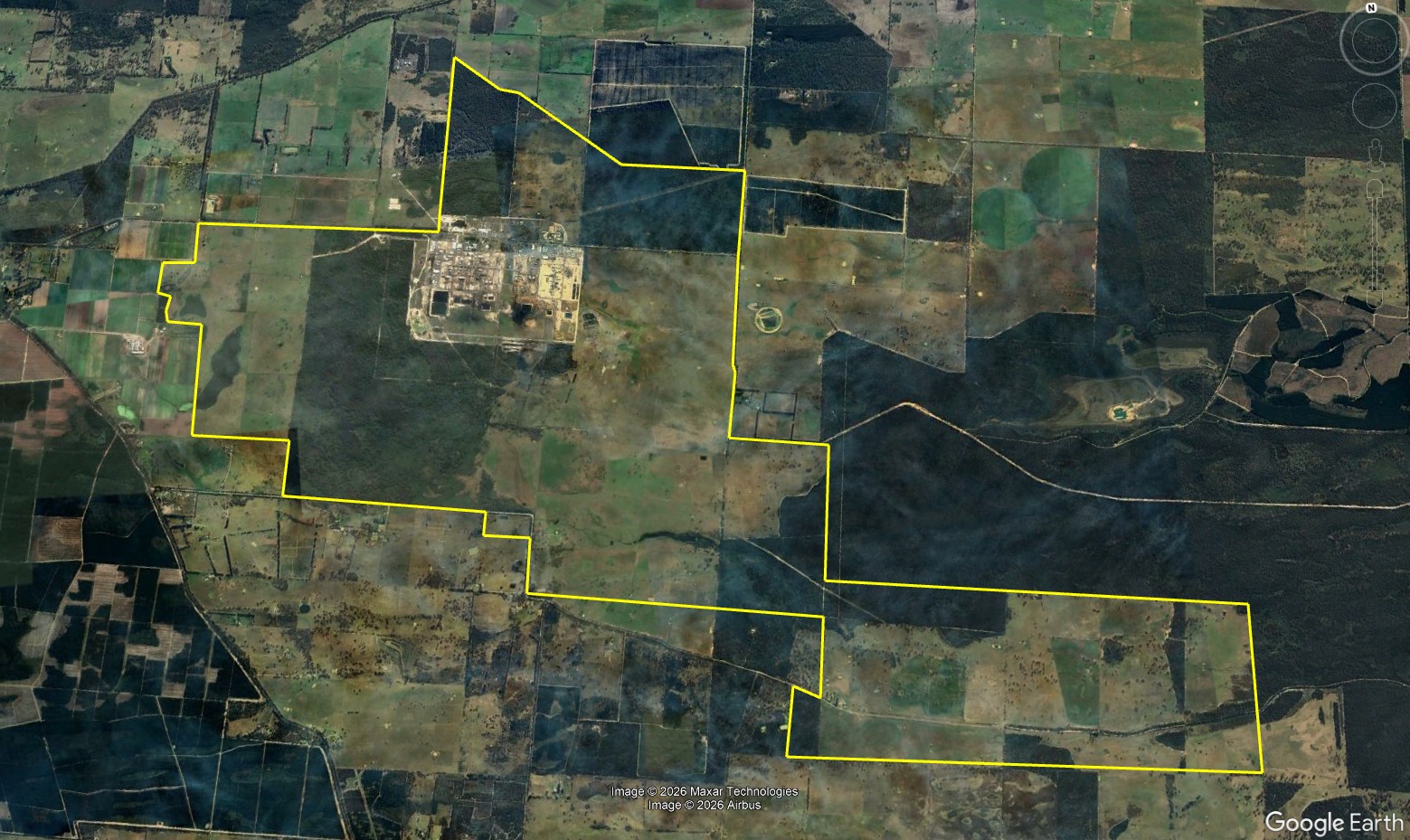

Longford Gas Plant and surrounding farmland 'buffer' cover almost 3000 hectares of the land. Wind can carry PFOS chemicals attached to dust and in aerosol form, through the air with predominate winds blowing either east or west. Drainage lines, dams, paddocks and ephemeral waterways have been polluted by the Longford site.
Farmland around the site and surrounds is grazed by cattle and has crops planted on sections of it. Intensive vegetable cropping occurs 3km west of the site.
Groundwater within the 'farmland buffer' is prevented to be used for drinking water, irrigation, stock watering or recreational uses. Water bodies have to be fenced off reducing the risk of stock drinking dam water and people using the water bodies recreationally.
Longford originally discharged wastewater and stormwater into local waterways and paddocks, but since 1987 a large portion of this waste water has been diverted via a pipeline to a saline pond managed by Gippsland Water, 11km east of Longford. Eventually some of this polluted water will end up being released into the ocean by Gippsland Water's ocean outfall near Delray Beach.
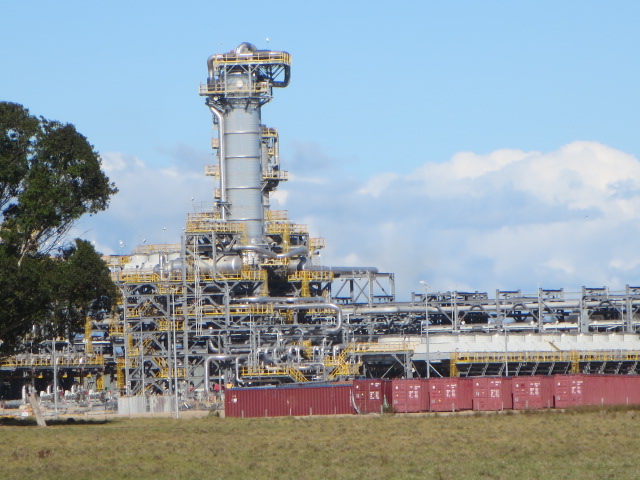
Over 2016/17 93% of soil and sediment samples at Longford had PFAS detected. 96% of samples of surface water tested positive for PFAS with seven samples offsite exceeding ecological criteria. Note that these tests were conducted almost 20 years after the fire at Longford.
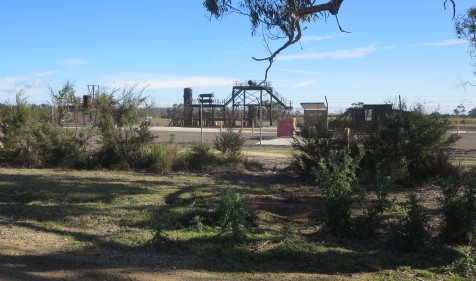
The fire training ground at the north east area of the gas plant site has been the major source of PFAS contamination at Longford for decades.
The fire training ground has had high levels of PFAS recorded in concrete in the foam storage area drain, failure prop pad and spoon drain, helicopter prop pad, crude burn pit spoon drain, process unit prop, walkway prop pad and box drains. PFAS chemicals would have been leaching off the site for decades. Exposure to workers training at this area is unknown but could be likely to be significant if adequate fire protection clothing and breathing apparatus were not provided. Fire training could occur at this site up to 2 times per week. In 2018 100 workers who worked at Longford and Bass Strait Oil Rigs had their blood tested for PFAS. Some had very high results.
A program to remediate contaminated soils and concrete at the Fire Training Ground (FTG) was implemented in 2020 and supposedly finished in 2022. 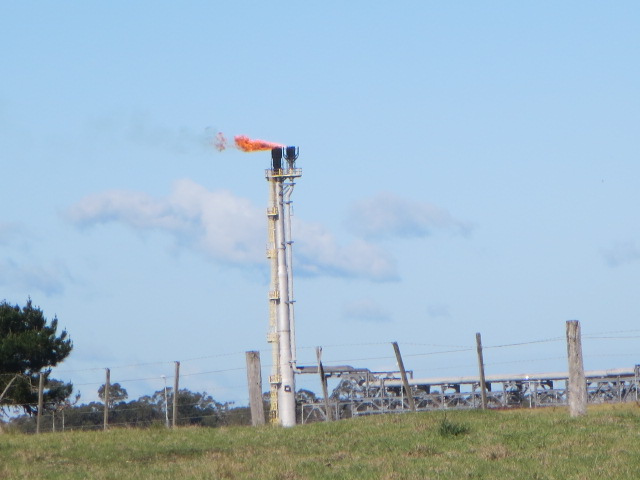
Gas flare at Longford. The smell of the gas can be smelt kilometres downwind of the site. Winds at the site blow predominantly to the west and to the east.
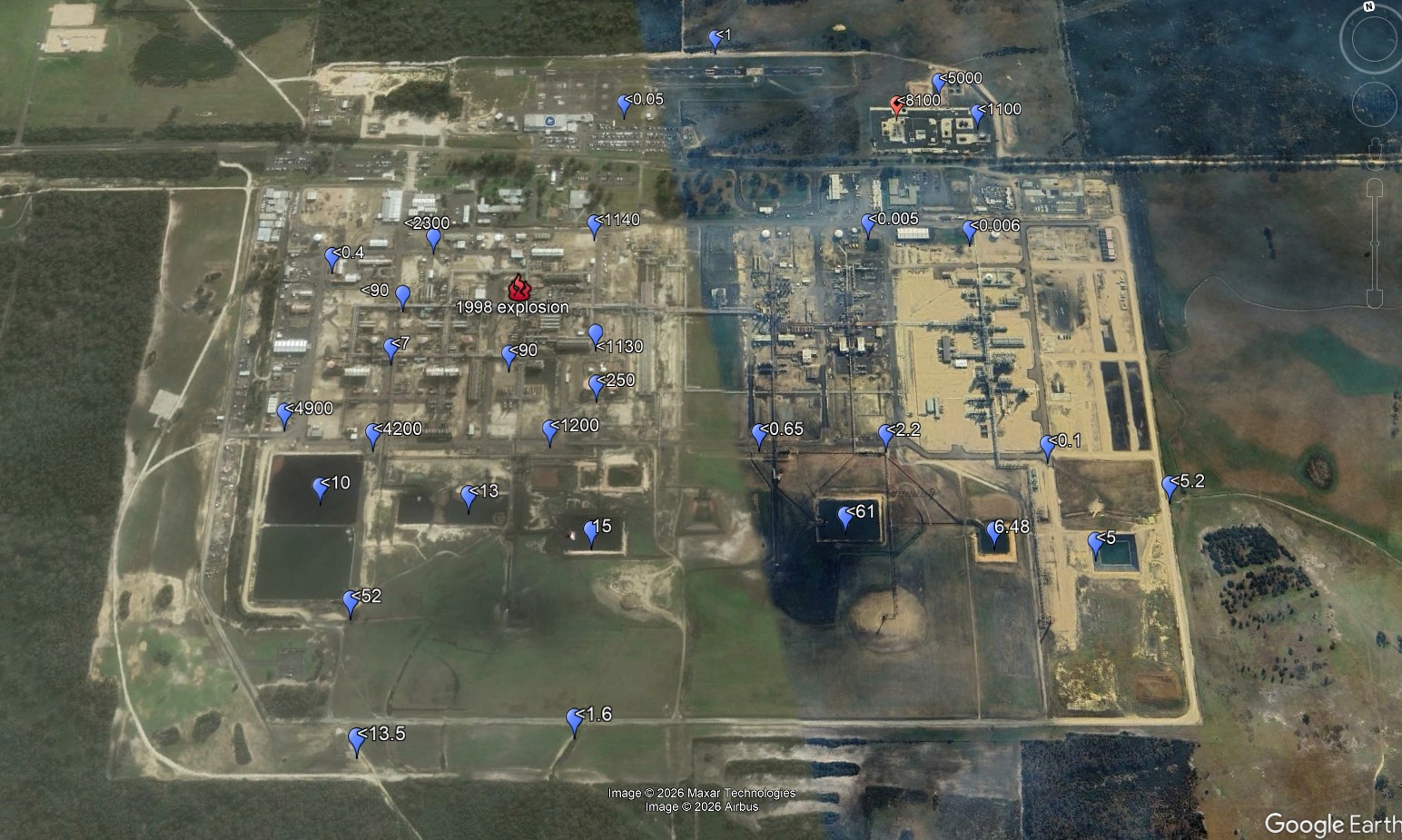
Highest PFOS & PFHxS detections at the Longford plant, taken 20 years after the fire during surface water testing in 2018. What was happening between 1969-2018? The highest level recorded was <8100μg/L (parts per billion) detected in the Fire Training Grounds located in the north eastern section of the plant. The Fire Training Grounds also recorded the highest levels of PFOS & PFHxS in soils. The other key PFOS & PFHxS hotspot was in the south west corner of the site, approximately 400 meters from the 1998 explosion site. Risks of offsite contamination of surface water occur due to rainfall events creating stormwater and during operational runoff issues.
Stage 1 remediation of some of the highest risk areas was undertaken between January and July 2020. This included soil removal from the Crude Oil Pit, Foam Storage Area and the Failure Pad. Temporary storage of 620 cubic meters of soils was also instigated by capping and bunding. Concrete slabs were also built over existing fire training slabs, with new ashphalting over areas not concreted over at the FTG. Further mitigation of the site apparently occurred in 2021 and 2022. It is clear however that the site will never be fully remediated.
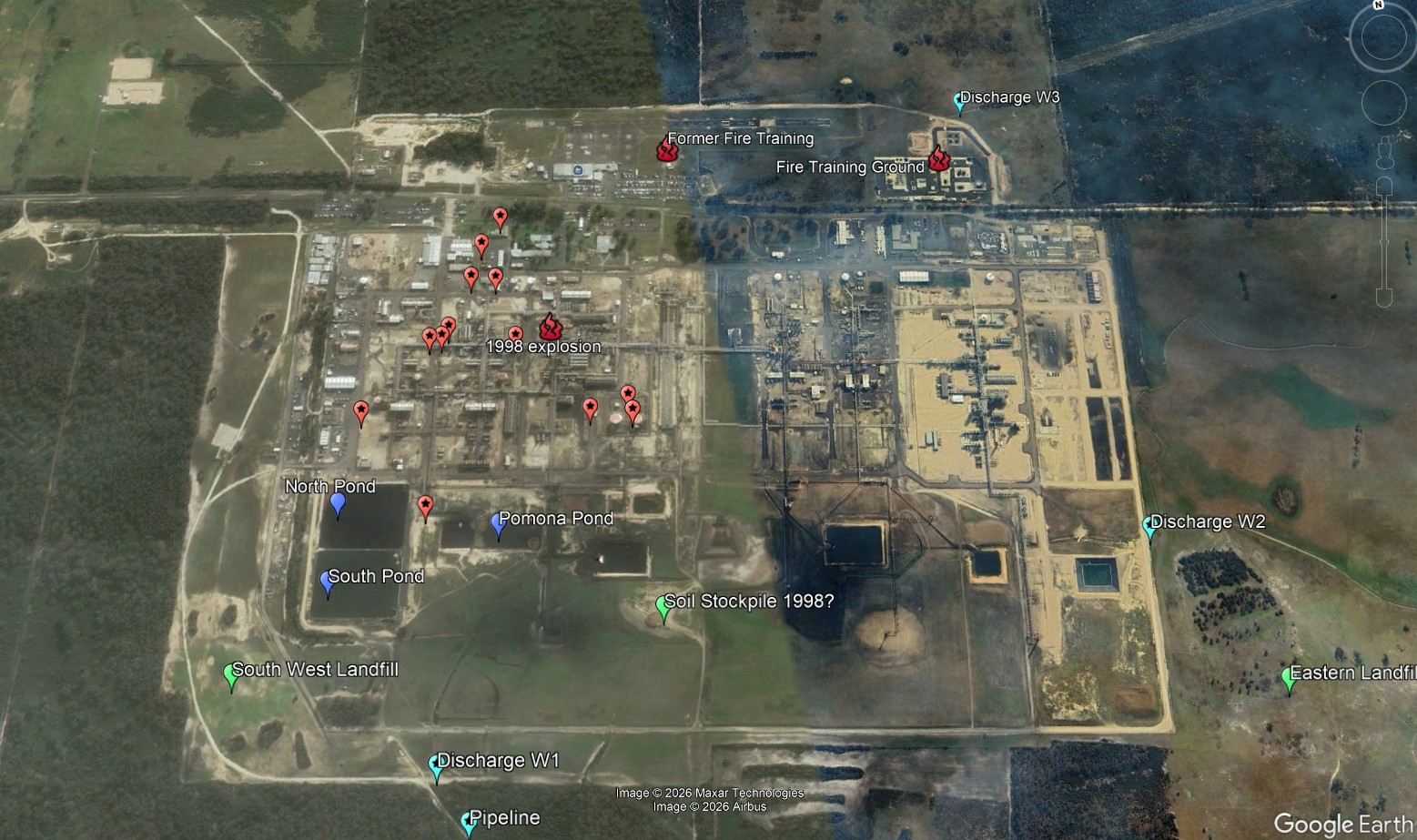
A map of the Longford Gas Plant showing approximate location of the 1998 explosion. The red pins indicate other sources of AFFF within Longford including 2 fire stations on site, foam trailers and foam tanks. The light blue pins represent water discharge points. The dark blue pins highlight PFAS polluted water storages, known as secondary pollution sources and green pins represent areas where contaminated soils were stockpiled after the 1998 fire. Note that the highest PFAS levels were recorded at the Fire Training Ground and not where PFAS was used to suppress the 1998 fire.
Prior to the 1998 fire, fire training would have been conducted at two locations to the north of the main facility. The main training would have occurred at the north east section of the site, with another smaller training site located near the heliport. Draining of PFAS chemicals from the heliport and fire training facility drained in an easterly direction at Discharge W3. PFAS from the fire training site may have totalled 20-30 kg/yr. Recent remediation could mean that PFAS totals leaving the site and draining to the east may be reduced to 20g/yr.
Apparently water has been reduced in recent years coming from offshore oil rigs and discharges to the environment surrounding the Longford facility were reduced further by the Saline Water Pipeline to Dutson Downs some years ago. The majority of stormwater is now captured in the pond system and discharged to Dutson Downs via the pipeline.
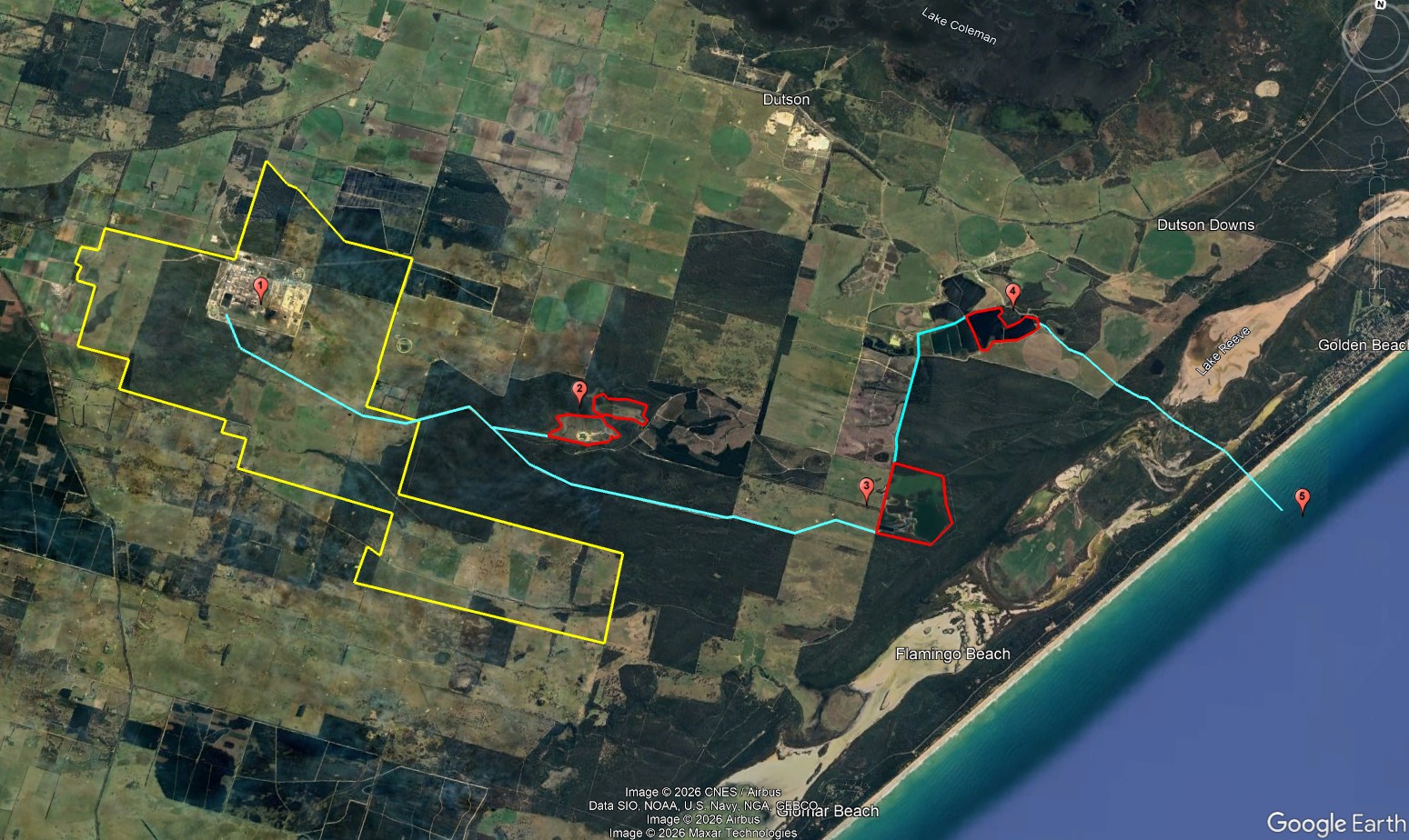
1= Exxon/Mobil Longford Gas Plant, 2=Western Storage Pond, 3=Saline Holding Pond, 4=Pond D & Pond E (Dutson Downs), 5=location of Golden Beach/Delray Beach Main Outfall. The Blueline indicates location of Saline Water pipeline and pipelines/sewers within Gippsland Water's Dutson Downs facility. Leakage from pipelines are common.
The Western Storage started operating in 1976, and the Esso Saline Pond was commissioned in 1982. An overflow discharge point was added to the Saline Pond to allow discharge into Western Storage. Due to high salinity, water from Longford has primary treatment at the Saline Pond, which is an evaporation pond. When over capacity is reached at the Saline Pond, water is diverted to the Western Storage. (sidenote: PFAS can also volatilise into air at Ponds as well as the Longford plant itself).
The ocean outfall was commissioned in 1992, which also meant that a pipeline was constructed from the Saline Pond to connect with ponds at Dutson Downs.
Recovery and processing of crude oil and natural gas produces a significant volume of wastewater and consists of a mixture of saline formation waste and industrial wastewater. Both process water* and formation water** have been permitted to be released into the Western Storage Pond and the Esso Saline Pond.
(*Process waters are created onshore and consist of rain runoff, wastewater from plant operations, treated sewerage, firewater, fire training ground wastewater and runoff and condensed water from the crude stabilisation plant). (**Formation water consists of gas, oil and saline water and is created via extraction at oil rigs). Most formation water is discharged into the ocean from oil rigs, however some remains in the crude that is pumped to Longford. The oil and water is separated at Longford. The waste water from this process is then piped to the Esso Saline Pond).
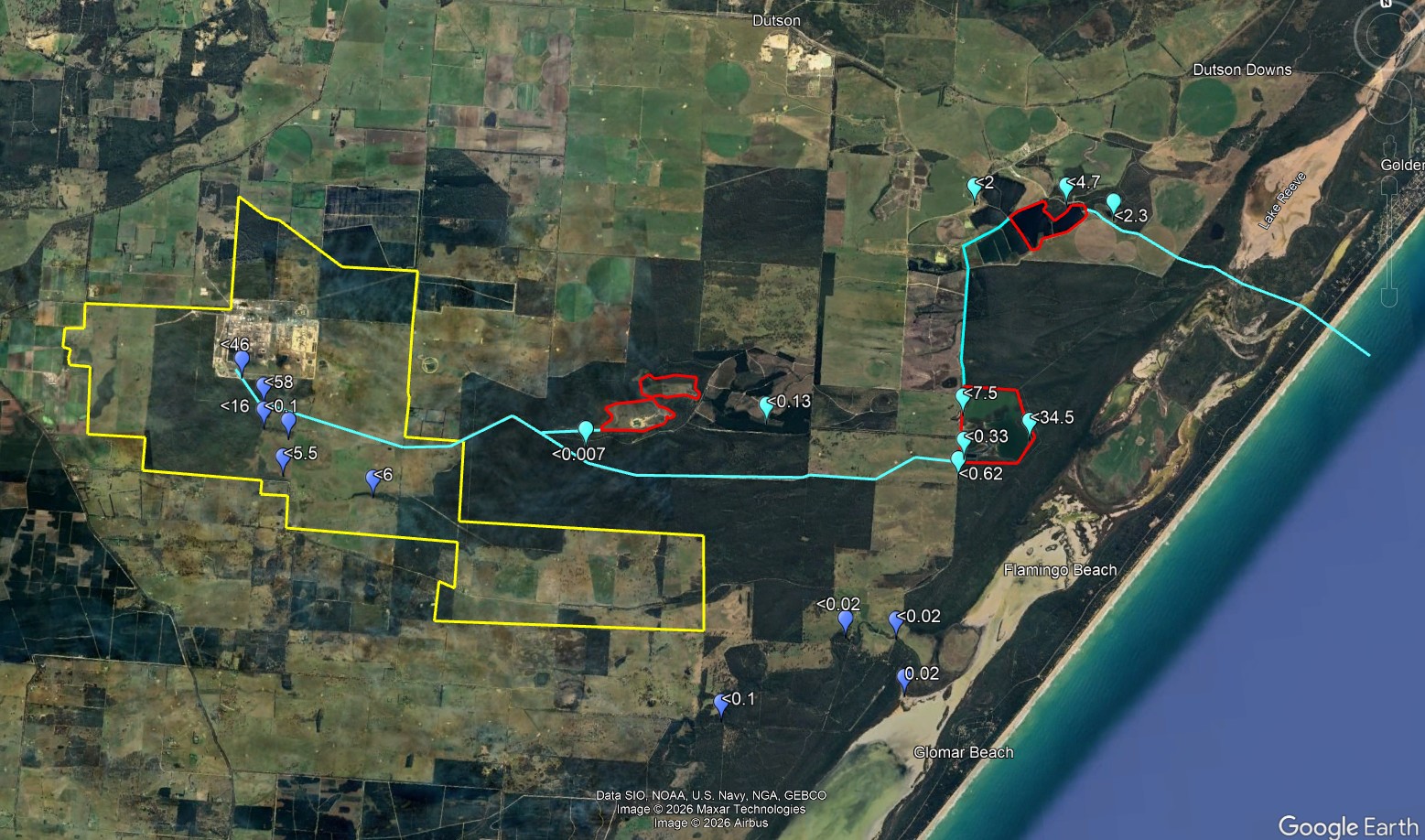
PFOS detections μg/L (parts per billion) offsite from Longford: Has Gippsland Water received a 'PFAS hospital pass' from Longford? Note that the 99% ecological default guideline for PFOS is 0.00023μg/L (parts per billion). Maximum levels of PFAS at Gippsland Water's Western Storage Pond, Esso Saline Pond, Dutson Downs* Ponds D & E, remain contaminated with PFAS chemicals long after the 1998 Longford fires. (*Dutson Downs ponds would also be receiving PFAS from other industrial and residential sources).
The dark blue pins on image above (μg/L) reveal PFOS contamination offsite from Longford from surface water samples taken mainly during 2017, nearly 20 years after the Longford disaster. The light blue pins (μg/L) were from surface water samples taken in 2020/21.
The numbers on the image refer to PFOS detections only, not other PFAS chemicals. (eg The PFAS chemical PFHxS was detected at levels up to 12 times higher than PFOS near the Esso Saline Pond in 2020/21. 9 other PFAS chemicals were also detected near the Saline Pond). Groundwater detections are also not on the map. Groundwater has also been polluted with PFAS chemicals including at locations near the pipeline, which indicates that the pipeline has leaked. Groundwater has also been detected near and Western Storage Pond and Esso Saline Pond.
Gippsland Water also received an EPA Clean Up Notice in 2019 at Dutson Downs and investigations revealed that groundwater at the premises is contaminated with BTEX, organics, inorganics, dioxins, metals and PFAS.
The contamination from Longford follows a south east drainage pattern into Carr Creek, which then flows into Lake Reeve, part of the Internationally significant Gippsland Lakes RAMSAR Wetlands which are incredibly important for migratory birds. PFAS chemicals obviously flow overland and concentrate in drainage channels before continuing to Lake Reeve. PFAS chemicals have been detected in sediment and surface water of Lake Reeve.
The location where Carr Creek meets Lake Reeve, where PFOS testing was done in 2017 (0.2μg/L), had levels almost 90 times higher than the 99% default guideline ecological guideline, 20 years after the Longford fire. What was happening in the previous 20 years?
Outside of the Gippsland Water managed areas, Carr Creek is regarded as the highest priority source area, in terms of PFAS contamination from Longford due to it having the highest estimate of mass contribution of PFAS at 62 g/year. This is likely to remain ongoing for years.
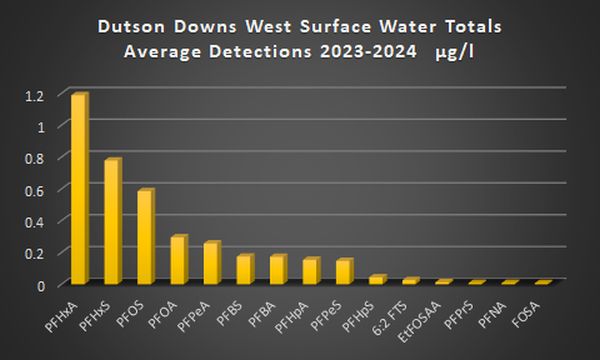
Information gleaned from Gippsland Water in 2024 highlights PFAS detections at a location called Dutson Downs West shows that the PFAS chemicals with highest average detection levels are PFHxA and PFHxS. It is unclear from the Freedom of Information request if Dutson Downs West refers to the Western Storage Pond. There are only ecological guidelines set for PFOS.
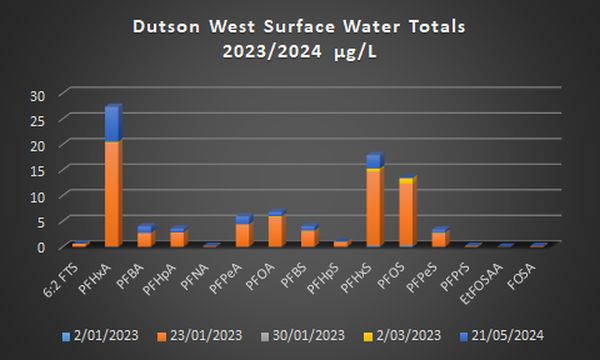
Highest PFAS levels at Dutson West were in January 2023. Was Longford contributing to these totals?
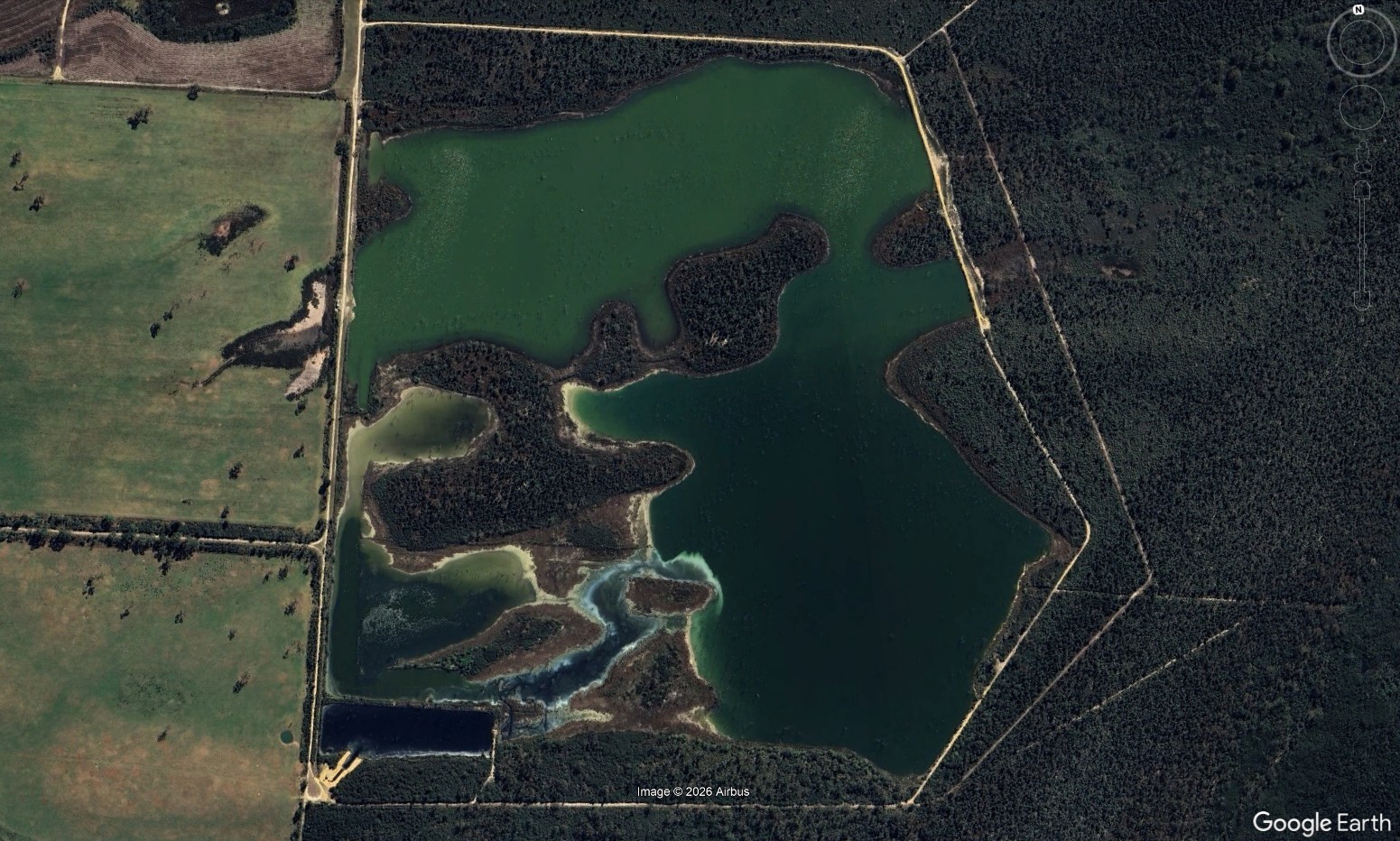
The Esso Saline Pond. Birds observed using this pond include Eurasion Coots, Black Swans, Little Pied Cormorants and Chestnut Teals. Kangaroos, koalas and other wildlife would also likely be in the area. What responsibility does ExxonMobil/Woodside have to remediate this Pond or is it left to Gippsland Water (ratepayers) to deal with this ongoing pollution? Has Longford Gas Plant been polluting, via groundwater the Lake Reeve environment?
Surface water in Gippsland Water's Saline Holding Pond recorded levels ~150,000 times higher than the 99% ecological guideline in 2021. This excessive pollution probably means that the entire Saline Holding Pond is contaminated at high levels, with much lower levels of PFAS still entering the pond. The pond's sediment is also contaminated and sediment contamination can also be a cause of groundwater pollution. Other contaminants include heavy metals, hydrocarbons and Volatile Organic Compounds. Dioxins have also been detected in sediment.
There have been three aquifers tested under the saline pond: Boisdale, Haunted Hills and Quaternary. The coastal aquifer under Lake Reeve has also been tested in 2021. Various aquifers underlying the saline pond have been poisoned with cobalt, copper, nickel, zinc and the PFAS chemicals PFHxS and PFOS. Arsenic, boron, manganese, silver, PFOS, chloride, sodium have also detected in Lake Reeve Quaternary aquifer. PFOS was detected in groundwater in the coastal aquifer at 3 times the ecological guideline about 1km east of Esso's saline pond about 5km north of the Carr Creek outflow. Groundwater discharge zones near the saline pond also occur in Lake Reeve including vegetation and wetlands. Aerosols from the saline pond could also carry PFAS particles on the wind. Contaminated sediments were also detected in 2021 at the Esso Saline Pond at almost 9000ug/kg.
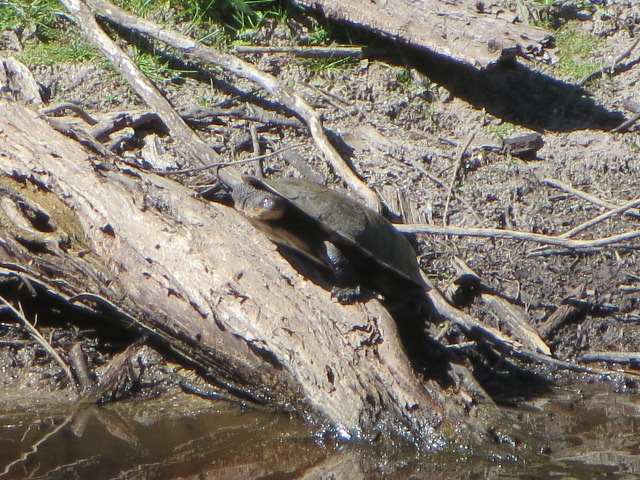
Long Necked turtle Chelodina longicollis at a pond in a Carr Creek waterhole, 2km west of Lake Reeve. Most of the creek was running dry when FoE visited in November 2025. A large section of the creek cannot be accessed as it is gated and located on private land. It has been noted that the major environmental risk in terms of PFAS to RAMSAR listed Wetlands in and near Carr Creek is to migratory birds that forage in pooled surface water. Where Carr Creek adjoins Lake Reeve there is however hypersaline saltmarsh. FoE did not access Lake Reeve during our visit. Lake Reeve is an important breeding and roosting habitat for water fowl and is one of Victoria's most important locations for wading birds.
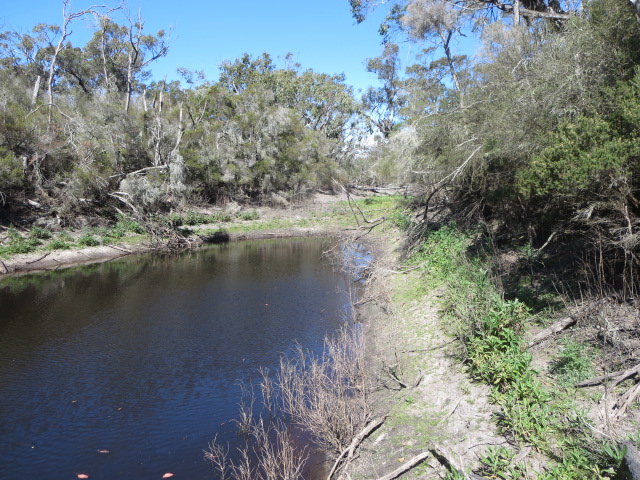
Deep waterhole on Carr Creek, 2km west of Lake Reeve and 9km south east from the Longford Gas Plant. One of the only sections of the creek that contained water when FoE visited the site. This waterhole would have traces of PFAS in it and its sediment. PFAS accumulates upwards in the food chain. Longford and surrounds would have PFAS in sediment which could mean that predatory birds such as Grey Falcons, Harriers and Snipes are most at risk from sediment contamination. (eg feeding on small mammals in the contamination zone). Contaminated surface waters could be a major problem for the Australasian bittern. Most frequently observed birds near Carr Creek would include Black Swans, Little Pied Cormorants, Chestnut Teals, Eurasian Coots, White Faced Herons and ducks such as Grey Teals and Pacific Black Ducks. Red Capped Plovers and Swamp Harriers would also be near the area.
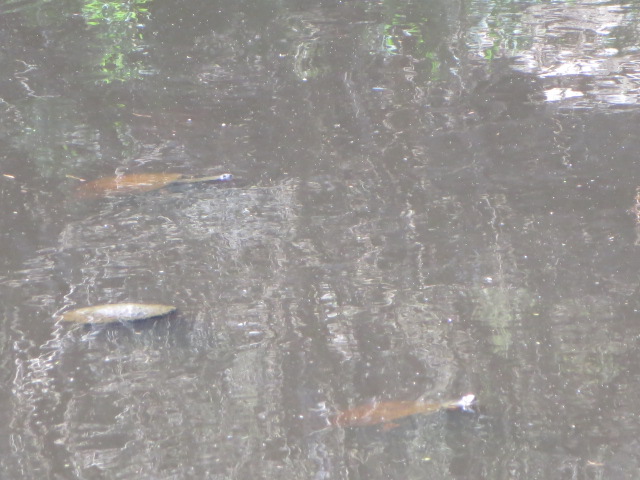
Numerous Long Neck turtles turtles were observed in the waterhole. These turtles can live for 50 years. Their young can be predated on by birds of prey, fish, water rats and lizards. It is highly likely that these turtles and the Carr Creek foodchain would have been exposed to high levels of PFAS chemicals. These turtles eat insects, worms, tadpoles, frogs, fish, molluscs, plankton, carrion and plankton. It is likely that all of these species and crustaceans and macroinvertebrates would have been impacted by PFAS chemicals that have left the Longford site.
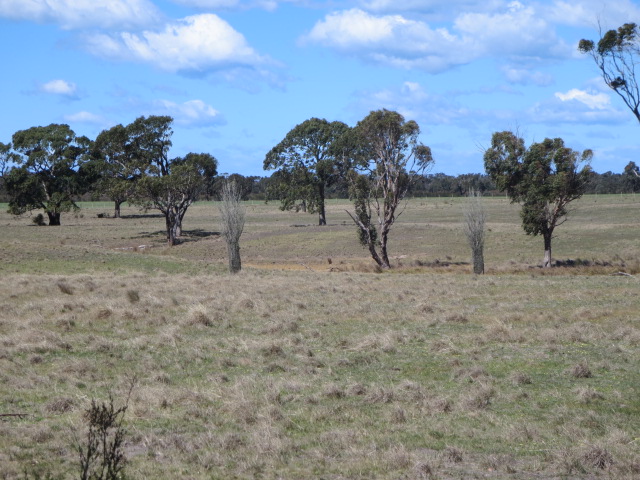
Carr Creek does not flow all the time - it is ephemeral. Its runs dry for a large amount of the year. PFAS will therefore flow into the Creek during rainfall events and wet periods. PFAS will however remain in sediment and vegetation near the waterway.
For more information contact [email protected]
If you feel inspired you can donate to our pesticide/PFAS research here.