
In September, Act on Climate facilitated two community resilience mapping sessions hosted by the Nillumbik Climate Action Team (NCAT). The proactive sessions in Hurstbridge and Eltham produced great actionable ideas for community members to start working on.
Appropriate and relevant climate resilience initiatives are key to keeping communities safe. This can take many forms, including preparing for and adapting to the changing climate and its impacts, for instance, by increasing disaster preparedness. Community resilience mapping helps communities understand their unique challenges and strengths, which climate impacts they’re most at risk from and who is most at risk, so that they can implement appropriate adaptive solutions.
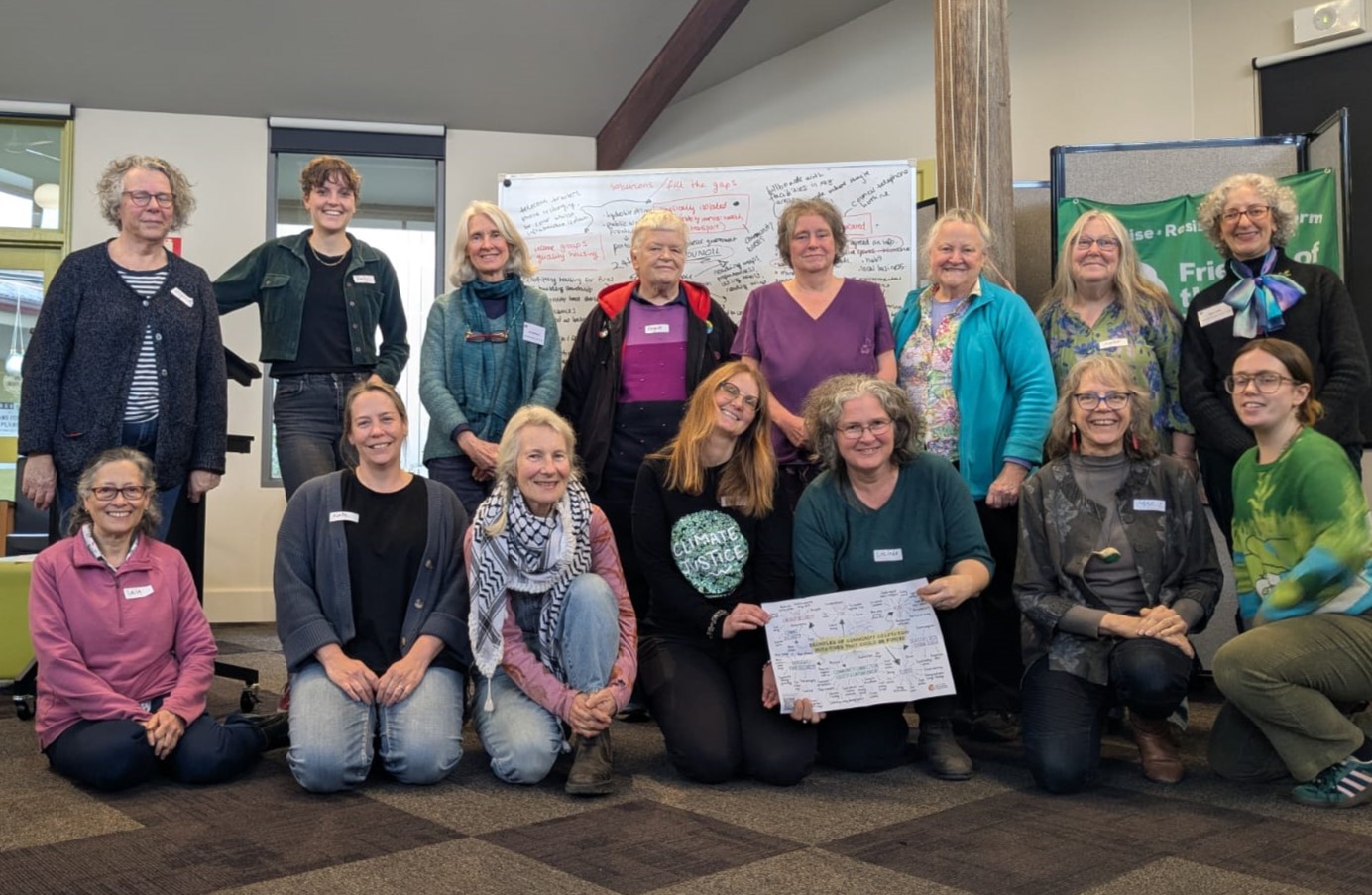
NCAT, Act on Climate and Hurstbridge community members at the resilience mapping session.
We're offering support to anyone who wants to facilitate Resilience Mapping in their own community. Check out our Community Resilience Mapping Facilitation Guide, which you can use to guide the running of your own event, and read until the end for more information. This activity was adapted from the Climate Resilience Project.
Community Resilience Mapping is used to achieve climate resilience by community members brainstorming strategies to keep their community safe. The session:
- Helps inform adaptation and emergency response plans & the prioritisation of time and resources.
- Results in practical community-led solutions & knowledge of how can stay safe.
Through identifying:
- Exposures, meaning various localised climate impacts.
- Sensitivities, concerning who and which areas are most at risk.
- Assets, meaning what is already in place to reduce or prepare for impacts.
- Adaptive Capacity, meaning where are the gaps in impact preparedness and how may they be addressed.
Read on for the outcomes of the community resilience mapping session with NCAT in Hurstbridge. You can find the outcomes for Eltham here.
Hurstbridge
After the inspiring session in Eltham, Act on Climate was invited by the Nillumbik Climate Action Team to facilitate another Community Resilience Mapping. The event took place on the 13th of September in Hurstbridge, on the lands of the Wurundjeri people of the Kulin nation The differences in outcomes of the two Nillumbik sessions speak to the diverse concerns of community members as well as strategies for adapting to climate impacts and building resilience.
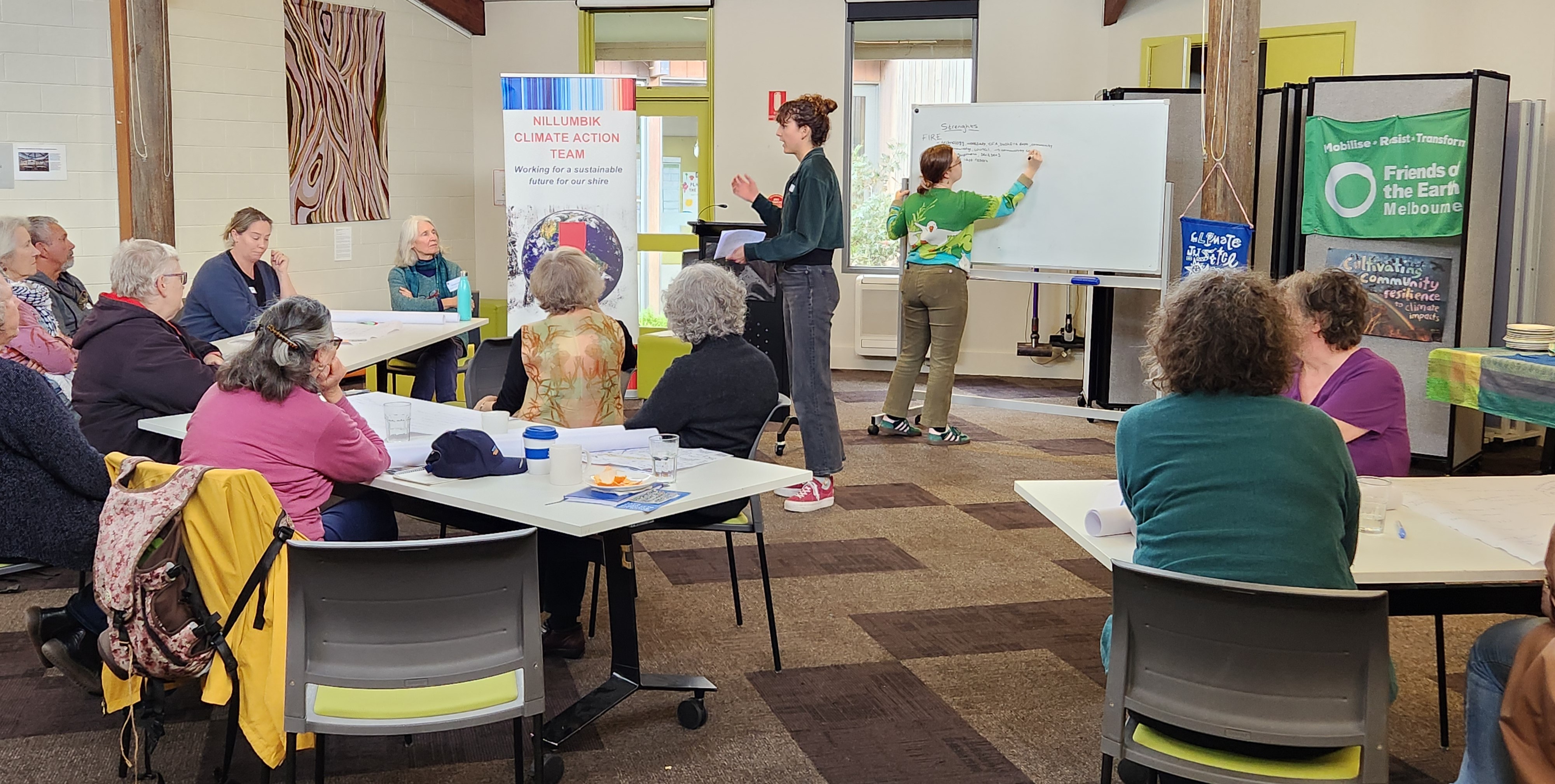
Identified Exposures
The main exposures brought up and causing concern are:
- Bushfire
- Heat
- Infrastructure failure
Other climate impacts and exposures included extreme weather events, drought and subsequent food insecurity, uncertainty/under preparedness of governance and overdevelopment. Again, after identifying the climate impacts participants were most concerned about, they formed three small groups, each focused on one impact to discuss the strengths, sensitivities and adaptive capacities of the community.
Bushfires
Identified Strengths
The group identified that the adaptive strengths for fire safety in their community are:
- Communications
- Local knowledge
- Preparedness
- Places of last resort
Identified Sensitivities
The group identified sensitivities for fire safety and community members most at risk:
- Disengaged community
- Ecosystems and native flora at risk
Community members most at risk:
- Aged care facilities
- Visitors to the area
- People with disabilities and health conditions
- Unhoused people
- Young children
- Uninsured people
Adaptive Capacity
The group identified several adaptive capacities and solutions addressing the current gaps in fire safety:
- Retrofitting housing for fires with better building standards.
- Skillshare/practical information
- Carbon levels shared on news
- Maintenance of escape routes
- Firewatch for visitors to area
- Funding for local action groups
- Community-led fire safety working bees
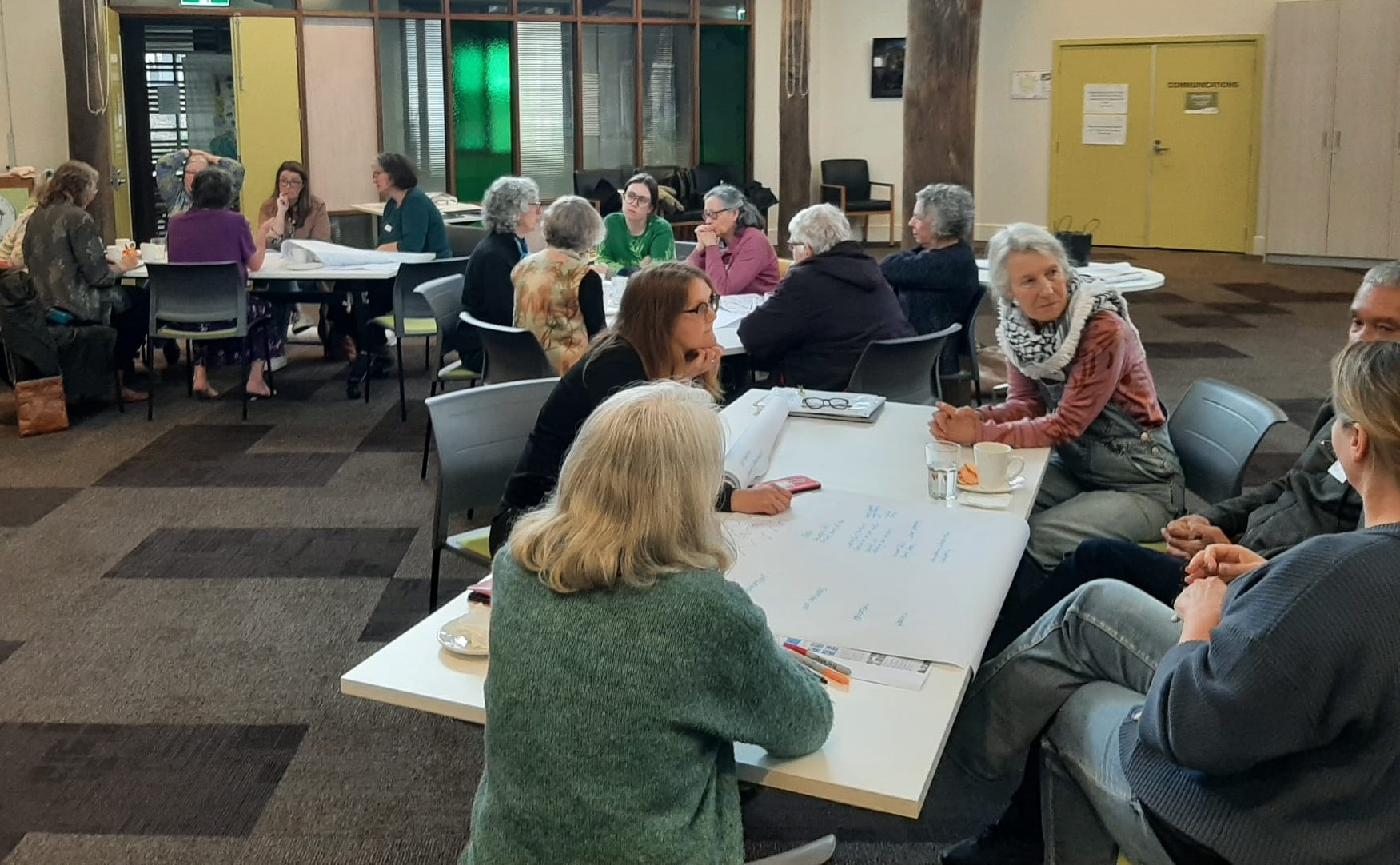
Heat
Identified Strengths
The group identified that the adaptive strengths for heat resilience in their community are:
- Heat refuges
- Tree canopy
- Maternal health centres
- Emergency services
- Communications
Identified Sensitivities
The group identified that the sensitivities for heat safety and those most at risk in their community are:
- Lack of heat resilient infrastructure
- Lack of information
Community members most at risk:
- Outdoor workers
- Geographically isolated people
- People with disabilities and people living with mental health conditions
- Climate refugees
- Unhoused people
- Old people
- People with less access to financial resources
Adaptive Capacity
The group identified several adaptive capacities and solutions addressing the current gaps in heat safety:
- 24/7 Community heat shelters
- Skillshare/practical information
- Independent power supply
- Mutual aid organisation and preparedness
- Improved infrastructure
Infrastructure Failure
Identified Strengths
The group identified that the adaptive strengths for infrastructure in their community are:
- Strong community network
- Neighborhood houses
- Batteries, solar panels, generators
- St Andrews washing machines
- Food pantries
- Community Water tanks
- Community buses
- Information sharing through electronic signage.
Identified Sensitivities
The group identified that the sensitivities of their communities due to infrastructure are:
- People who rely on public transport
- People with disabilities who cannot self-evacuate
- Emergency service workers
- People who work from home who don’t have access to cooling
- Renters
Adaptive Capacity
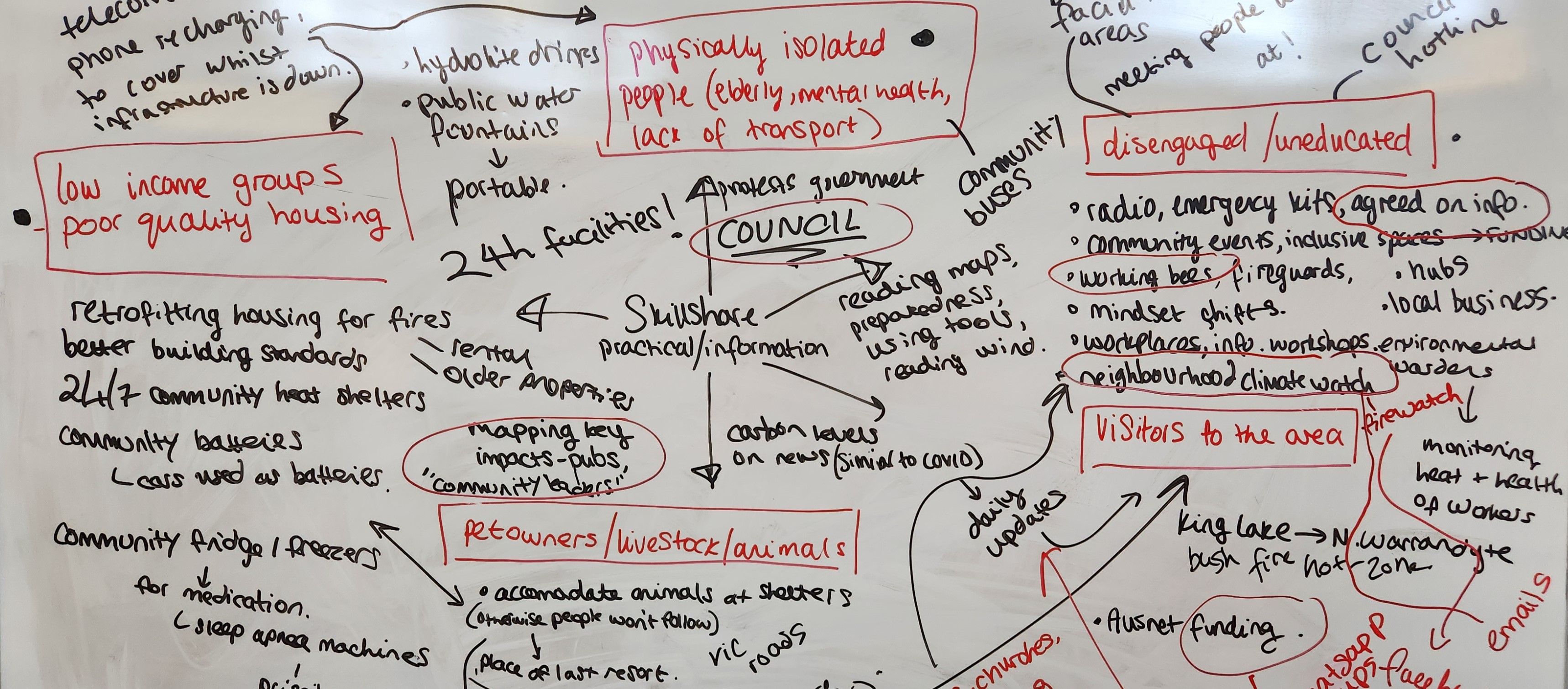
The group identified several adaptive capacities and solutions addressing the current gaps in infrastructure to keep people safe from climate impacts:
- Telecom trailers for phone recharging
- Community batteries
- Community fridge/freezers
- Priority power list: for medication and medical equipment
- Hydrolyte 'drivers' and public water fountains
- Animal shelters
- Billboards with key facilities
- Council telephone hotline
- Neighborhood climate watch
Conclusion
It was interesting to see the differences and similarities between the group discussions in Eltham and Hurstbridge. The connectedness of community members emerged as foundational to keeping the community safe. Social justice was central to many ideas with a focus on keeping people with disabilities, old people and unhoused people safe from climate impacts and centring their safety in emergency situations, such as evacuations. More funding was called for to support community-led projects, which are place-based and informed by lived experiences.
As overarching themes in Hurstbridge, the community felt that:
- Skill and information sharing among community members was important and insufficient.
- Community resilience through connectedness should be a priority.
- Improved infrastructure to serve the community and members most at risk was needed.
What's Next?
NCAT, Act on Climate and the community members who participated in the two Nillumbik Resilience Mapping Sessions will meet to discuss the learnings of the workshops and develop the next steps of action to address the identified gaps in climate resilience.
The community members are keen to action some of the initiatives and work with the local government to increase work on and funding for adaptation projects.
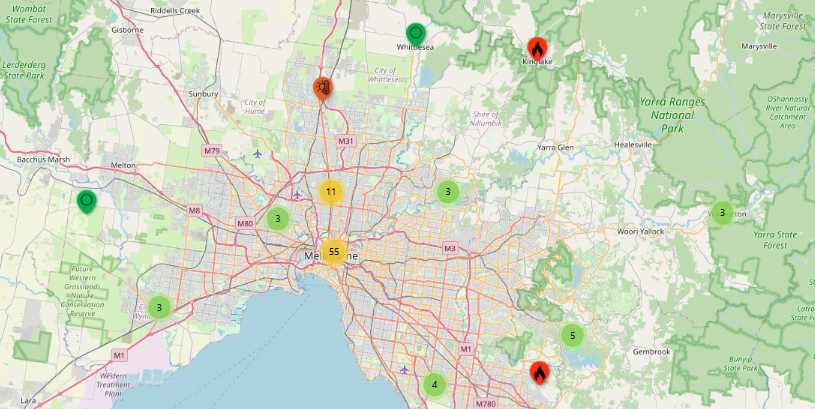 See what initiatives are already happening around you. Know of a climate adaptation or resilience project that isn’t on the map yet? Submit a request for it to be added here.
Want help making this happen in your community?
Visioning the future that we want to create is critical for adaptation to locked in climate impacts. What does adapting to a changing climate and building resilience look like in your community? What do you need to make your visions for a safe climate future come alive?
We're offering support to anyone who wants to facilitate the activity in their own community. Check out our Community Resilience Mapping Facilitation Guide, which you can use to guide the running of your own event! Read more on what community resilience mapping is and why to do it.
Uncertain about running a Community Resilience Mapping session in your community? We're happy to help! Contact Vicky Ellmore on [email protected] to answer any questions and walk you through running the event yourself, or we can come facilitate it ourselves, if possible.
Reach out for support to run Community Resilience Mapping in your community!
Stay tuned for further updates from Friends of the Earth's Act on Climate collective as we campaign for community-led climate adaptation by signing up for campaign updates here.
If you haven't already, please add your name to the call for a Victorian Community Climate Adaptation Fund. We need community-led climate adaptation that is continuously and adequately funded. This funding will enable communities to fulfil their plans to build resilient communities in a changing climate and keep those most at risk safe.
Mental Health & Wellbeing Support
Please be kind to yourself at this time and be aware of the impact of this on your mental health and wellbeing. Taking about, remembering and experiencing climate impacts and disasters can take a toll on your health and well-being.
If you need support, please visit the Climate Feelings Space, use Ecomind’s How are you feeling? tool, or attend an upcoming Climate Cafe.
Act on Climate acknowledge that we work on the stolen lands of the Wurundjeri people. Sovereignty was never ceded, and fighting for First Nations justice must always be a core part of climate justice work.