
A fungicide, banned by the Australian pesticide regulator 20 years ago has been detected in drinking water supplies across northern Victoria over the past decade. Benomyl was banned by the APVMA in 2006. It had been marketed under the trade name Benlate and manufactured by notorious company DuPont. Benlate had been surrounded in controversy including a class action undertaken in Australia due to widespread crop damage. Legal action by 1900 farmers against Dupont also occurred in the United States, Puerto Rico and Costa Rica in the early 1990's regarding widespread crop damage costing DuPont almost $1billion. The fungicide was also linked to a boy born blind (micropthalmia) in Florida after his mother claimed she had been exposed to the chemical when pregnant. Similar cases had apparently been reported in England. In 2008 DuPont paid confidential settlements to two New Zealand families whose families were born with birth defects.
Cross contamination of Benlate with the herbicide Atrazine was also the result of legal action in the United States in 1989. In 2001 a jury decision in Florida found DuPont liable for racketeering, negligence, fraud and defective product.
Benomyl was used in fruit, nut, vegetables and field crops and is toxic to soil microorganisms and invertebrates, particularly earthworms. Benomyl can also be highly toxic to aquatic organisms including fish. It breaks down into another nasty chemical called Carbendazim which can also be highly toxic to fish. In tests carried out over 2020-2021 in the Richmond River catchment in NSW, researchers also detected Benomyl. Marine scientist Kirsten Benkendorff was reported in the ABC saying in regards to Benomyl "It is a really big concern to have found a banned pesticide in our water here — we don't know who is using it or why," she said. "It's a pesticide with a pretty short half-life, so it's not something that has been hanging around in the environment for a long time."

Locations of where Benomyl was detected in Victorian water supplies between 2017 and 2026. Green pins represent between 1-4 detections and Red pins represent Benomyl 'hotspots' with more than 4 detections. The detections occurred as far east as Corryong to Mildura in the north west. Lal Lal reservoir was the most southern detection of Benomyl.
The information regarding Benomyl in Victorian drinking water supplies was gained through multiple Freedom of Information requests to Victorian Water Authorities. The FoI's covered the years 2017 through to 2025. Land Use Researcher for Friends of the Earth Anthony Amis was surprised by the results. Similar FoI's requested back in 2016 revealed 9 detections of Benomyl.
"From almost 2000 pesticide detections detected by water authorities across Victoria, Benomyl was the sixth most frequently detected pesticide with 141 detections in 43 different water supplies. Five separate water authorities reported Benomyl. How on earth is this fungicide still being detected 20 years after it was banned in Australia? It's half life can be about a year, but that doesn't fully explain all the detections occurring 15 to 20 years after it was banned. It could also be possible that a closely related chemical was detected, and listed as Benomyl by laboratories assessing the water samples.
If Benomyl was detected as the results suggest, the fungicide could have been stockpiled on farms or farmers were accessing the chemical through other means, probably online sales. The Federal pesticide regulator, the APVMA announced in February 2025 that it had removed 532 unregistered products from online stores in 2024. Was Benomyl/Benlate among products that were removed?" Six Benomyl detections have occurred since the APVMA made that announcement in early 2025.
"It's clear that a toxic fungicide has been used across a large swathe of northern Victoria, polluting water supplies, with the peak amount of detections occurring between 2019 and 2022. If it's been detected in water supplies, which cover a smaller amount of land in Victoria than other farmland, widespread pollution must have occurred outside of water supplies as well. What has been the ecological impact of this pollution?" Mr Amis said. Benomyl detections may also have been a result of spray drift as Benomyl was also detected in water from Lake Wartook in the Grampians. There is no agriculture within the Lake Wartook catchment so the chemical must have been blown in by spray drift or fell with rain. Benomyl was also detected in water supplies along the Murray River in the north west, north east Victoria and also in water supplies in the Grampians and Wimmera areas.
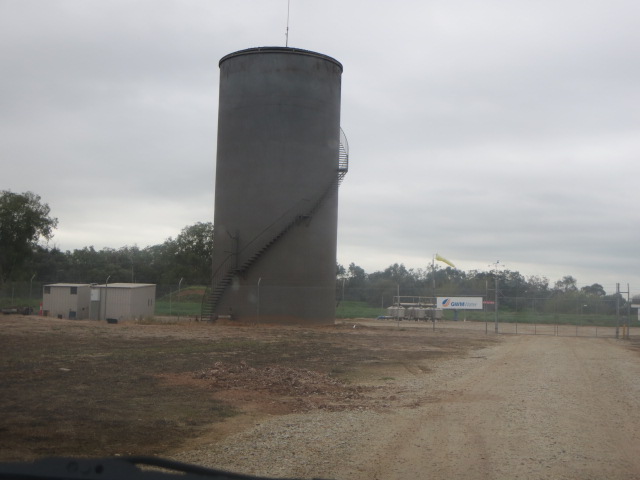
Quambatook (located 250km north west of Melbourne) recorded the highest number of Benomyl detections, all well below Australian drinking water guidelines. Quambatook is supplied with drinking water from the Normanville pipeline which can be supplemented by the Waranga Western Channel (Goulburn System). The Benomyl detections occurred in Quambatook drinking water supply between 2018-2026 indicating that the issue has been ongoing for almost a decade. Has the source of the Benomyl ever been investigated?
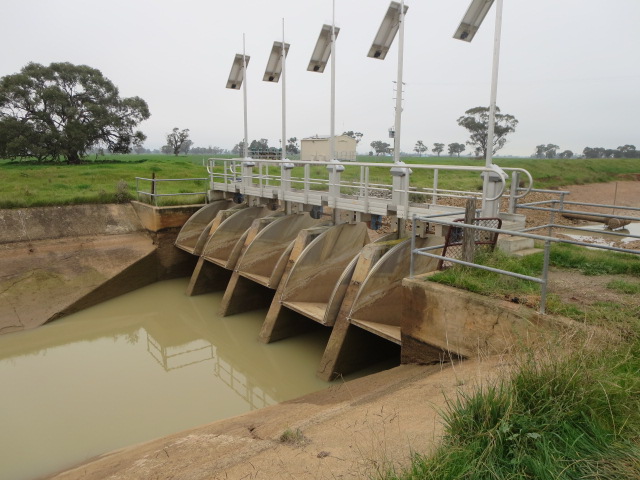
Benomyl was also detected at this location in the Waranga Western Channel in 2021 and 2022. The source of the Waranga Channel comes from the Goulburn River.
Benomyl does not have an ecological guideline in Australia, meaning quantifying potential ecological impacts are extremely difficult. Benomyl also supposedly breaks down into Carbendazim very soon after it is applied in plants, soils or aquatic environments. Carbendazim is the major environmental degradant of Benomyl and also the fungicides Thiabendazole and Thiophanate-Methyl. Can the Benomyl detections actually be cross-reactivity to structurally similar chemicals? Could the tests employed by the five water authorities be detecting Carbendazim, instead of Benomyl? It seems possible that this may be the case, but unlikely. According to comments from a scientist: "These compounds are detected based on their mass (parent compound mass and then fragment masses), so as benomyl and carbendazim vary considerable in parent mass (~290 and 190 m/z respectively), they couldn’t be mistaken for each other." Both Benomyl and Carbendazim have raised concerns over endocrine disruption and reproductive and developmental toxicity.
In Australia there are currently 35 products that have Carbendazim as an active constituent. 18 products have Thiabendazole as an active constituent, with an additional 8 products containing Thiophanate-Methyl. The five separate water authorities that detected Benomyl did not test for Carbendazim, Thiabendazole or Thiophanate Methyl. Carbendazim has an Australian drinking water guideline, the same as Benomyl of 90µg/L (parts per billion).
Carbendazim is registered for use in Victoria to control Chocolate Spot and Grey Mould in Chick Peas, Faba Beans, Lentil and Vetch Crops. Carbendazim is also used in Macadamia plantations in other areas of Australia and was linked to fish abnormalities at a Noosa fish hatchery in 2009. Thiabendazole is registered for use in Victoria to counter fungal disease in apple and pear crops, bulbs, corms, citrus, mushrooms, potatoes, sweet potato and turf. Thiophanate-Methyl is used as a fungicide on some ornamental plants.
There are no ecological guidelines for Carbendazim in Australia, but a proposed ecotoxicity threshold value for Carbendazim in Queensland has been suggested at 0.029µg/L (99%) and 0.45µg/L (95%). About one quarter of Benomyl detections were >0.029µg/L.
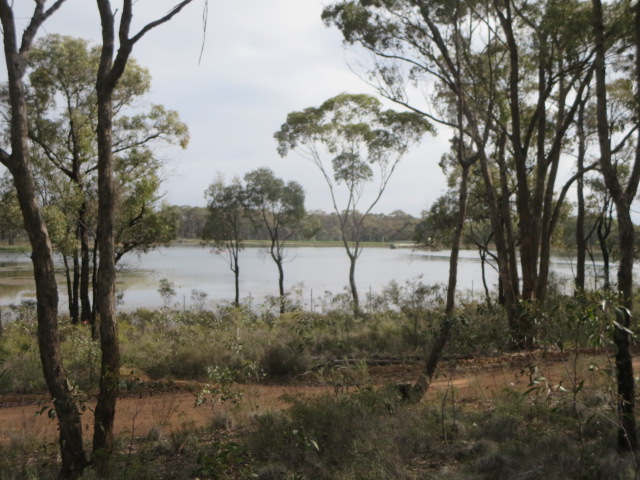
Centenary Reservoir - Maryborough's drinking water supply recorded 8 Benomyl detections. The water authority data only refers to the health implications of a particular chemical and not the ecological implications. Ecological guidelines also do not necessarily apply to water storages.
All Benomyl detections were in raw water that had not been treated and in some cases the detections were in large Reservoirs. The risks to drinking water would be lessened due to water treatment processes such as Powder Activated Carbon which can greatly reduce the amount of chemical in the reticulated water supply. The Australian Drinking Water Guidelines grant Benomyl a guideline of 90µg/L. Average amounts of Benomyl were 0.03µg/L (parts per billion) and about 0.03% of the Australian drinking water guidelines.
The highest amount of Benomyl detected in a water supply was 0.26µg/L in Tullaroop Reservoir north of Ballarat. Tullaroop is part of the Maryborough drinking water supply. Maryborough's drinking water supply (Centenary Reservoir) recorded 8 Benomyl detections between 2017 and 2024 averaging 0.028µg/L. A small farm channel south of Shepparton (outside of a domestic water supply) recorded the states highest Benomyl detection of 0.54µg/L. This site was apparently the location of a mass yabby poisoning event in 2022.

In terms of Benomyl 'hotspots' the water supply with the most detections was at Quambatook in the states north west. Quambatook recorded 15 detections of Benomyl between 2018 and 2026 averaging 0.043µg/L. Quambatook water treatment plant uses Granular Activated Carbon which will significantly reduce levels of Benomyl post treatment. Other Benomyl hotspots were Lake Fyans (east of the Grampians) and St.Arnauds 1000ML storage which both recorded 9 detections. The St.Arnuads detections could mean Benomyl contamination of the Grampians Wimmera water supply. Tullaroop Reservoir recorded 9 detections, with Centenary Reservoir near Maryborough recording 8 detections. There were also a large number of detections in North East Victoria, including 7 detections at Freeburgh storage near Bright and 5 detections at Nil Gully Myrtleford.

Benomyl detections at Quambatook as provided in a spreadsheet under Freedom of Information legislation.
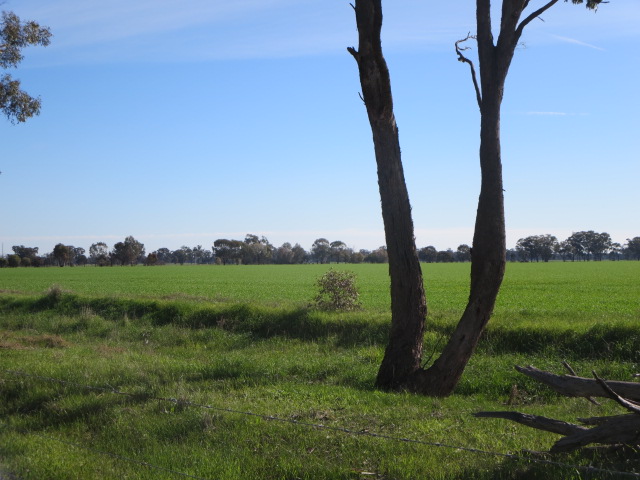
The states highest Benomyl detections were detected in this farm channel south of Shepparton in 2022. Note that this is not in a drinking water supply catchment. Did any State agency question why was a banned fungicide being detected at all? 14 other pesticides were detected in this channel including the insecticide Chlorpyrifos detected at 27,500 times higher than the 99% ecological default guideline. 700 meters of the farm channel was impacted. Is this site indicative of what is really going on in terms of pesticide pollution from agriculture in Victoria?